
Tiptree wellness Archives - Atlantis | Tiptree

What “Wellness” Actually Means (And Why It’s More Than Just Smoothies)

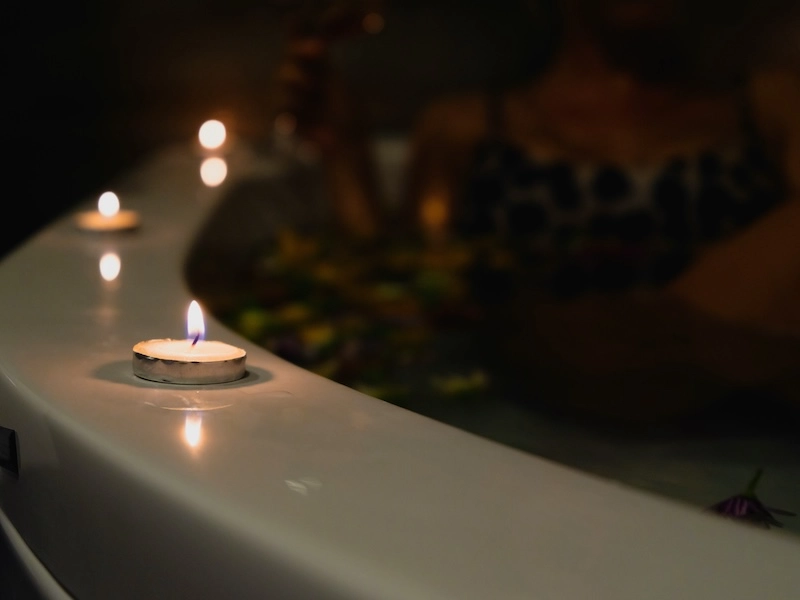
Calm spa setting representing holistic wellness in Tiptree, Essex

Wellness, Honestly: The 7 Pillars That Actually Matter

Short answer Real wellness isn’t green powders, £40 candles or influencers in matching loungewear. It’s the daily balance between what builds you up — movement, sleep, nutrition, stillness, connection, recovery and purpose — and what wears you down. Seven pillars. You don’t need all seven perfect. You need to pay attention to the one that’s most neglected right now, fix that, then move to the next.

“Wellness” is one of those words that’s been so thoroughly marketed at us that it’s almost lost its meaning. It conjures up green powders, expensive candles and influencers in matching loungewear photographing their breakfast smoothies. The actual thing — the version that genuinely improves your life — is far simpler, far cheaper, and not on Instagram.

The honest version is also reassuringly boring. There’s no secret. There’s no $300 supplement stack. There’s no biohack the rich know that the rest of us don’t. There’s just a small handful of things, done most days, for years. Here’s what they are and how to think about them.

A working definition

Wellness is the day-to-day balance between the things that build you up — movement, sleep, connection, calm — and the things that wear you down: stress, sedentariness, isolation, overwork, alcohol, screens.

You don’t reach wellness once and stay there. You tend to it, like a garden. Some weeks you’ll be ahead. Some you won’t. The job isn’t perfection — it’s never letting the weeds get so far ahead that you can’t catch up.

Wellness isn’t a destination you arrive at. It’s a garden you tend. Some weeks better than others. That’s the job.

The 7 pillars that actually matter

Skip the trends. The ingredients of real wellbeing are deeply unglamorous and remarkably consistent across every piece of decent research, every functional medicine framework, every culture that’s ever produced healthy long-lived adults. They are not new. They are not contested. They are not exciting.

They just work.

1. Movement

Most days, in some form. It doesn’t have to be intense. A 30-minute walk counts. A 45-minute strength session counts more. A swim counts. A garden tidy counts. What doesn’t count is the gym membership you’ve had for eight months and used three times.

The research is clear: regular movement is the single most powerful intervention for almost every aspect of physical and mental health. There is no pill that comes close. And the dose-response curve is generous — even small amounts of movement, done consistently, deliver outsized returns.

2. Sleep

The foundation everything else sits on. You can’t out-supplement six hours of broken sleep. You can’t out-train it. You can’t out-meditate it. It’s the one variable that, when it’s off, makes every other variable harder.

Most adults need 7 to 9 hours. Most adults get 6. The fix isn’t glamorous: consistent bedtimes, dark and cool bedrooms, less alcohol, fewer screens after 9pm, more attention to whether your weekday rhythm and your weekend rhythm are at war with each other.

3. Nutrition

Mostly home-cooked. Lots of plants. Plenty protein. The end of the article on what to eat is genuinely “most adults already know what to do — the gap is between knowing and doing.”

You don’t need to count calories forever. You don’t need to follow anyone’s diet. You need most of your meals to come from a kitchen rather than a packet, and you need enough protein to support muscle and satiety. Anything beyond that is fine-tuning.

4. Stillness

Meditation, breathwork, time without a screen. Five to ten minutes a day, in some form, where nothing is being asked of your attention.

This is the one most adults skip because it doesn’t feel productive. It is one of the most productive things you can do — not because of what it adds, but because of what it stops your nervous system from accumulating. A constantly-stimulated mind is an exhausted mind. Stillness is the off-switch that lets the rest of the system actually recover.

5. Connection

People who know your name. People you can ring at 11pm. People who notice when you’re not yourself. The strongest predictor of longevity in human studies isn’t diet, exercise or genetics — it’s social connection.

This is the pillar we underrate hardest in modern Britain. You can do everything else perfectly and still struggle if you’re lonely. You can have a less-than-perfect diet and still thrive if you’re surrounded by people who care about you.

The gym, the swimming pool, the class you go to every Tuesday — these aren’t just exercise venues. They’re some of the few places in modern adult life where you reliably bump into the same humans, week after week, without an agenda. That’s rarer than it sounds, and more valuable than it looks.

6. Recovery

Heat, water, rest days, gentle weeks. The bit nobody Instagrams. The bit that determines whether the training you’re doing actually delivers results.

Your body adapts to training stress during recovery, not during the workout itself. Skip recovery and you’re creating stimulus your body can’t respond to. Sauna and steam exposure, regular sleep, rest days, periodic deload weeks — these aren’t time off from wellness. They’re the bit where wellness happens.

7. Purpose

Something you give your attention to that isn’t admin. A hobby. A craft. A cause. A garden. A grandchild. A novel you’re writing terribly. Something that holds your interest because it’s yours, not because it pays the mortgage.

Purpose isn’t spiritual fluff. It’s a measurable variable in health and longevity research. People with a clear sense of purpose live longer, recover from illness faster, and report higher life satisfaction across the board. The absence of it is one of the quietest contributors to midlife unhappiness.

What this looks like at Atlantis

This is genuinely why we call ourselves a health and beauty spa, not just a gym. The training is one piece of it. The rest of the building is built around the other pillars too.

  • The pool, jacuzzi, sauna and steam in our spa area handle recovery and stillness. They’re not the dessert after the workout — they’re half the point of the building.
  • The timetable handles movement and connection. The same group of people, same time, every week. Some of our members have been doing the same Pilates class together for over a decade.
  • The beauty treatments with Sue handle stillness and slowing down. An hour where someone is taking care of you, not asking anything of you.
  • Reiki with Sean handles stillness at a deeper level — dedicated time away from the noise, with someone who’s practised holding that space for over thirty years.
  • The gym floor handles movement. The friendly staff handle the bits that aren’t on any timetable — the small daily connection of someone knowing your name and asking how your week’s been.

Nutrition and sleep are on you. We can’t do those for anyone. But we can be the venue that makes five of the seven pillars dramatically easier to keep up with.

Where to start if you’re starting now

Pick one pillar that’s weakest right now and give it your attention for two weeks. Not all seven. One.

  • Sleeping six hours? Aim for seven for a fortnight. Don’t change anything else.
  • Not moving? Two short sessions a week. That’s the only goal. Don’t add nutrition tracking on top.
  • Constantly anxious? Five minutes of stillness a day. Just that.
  • Lonely? Pick one social commitment a week you actually turn up to. A class. A walk with a friend. Same time every week.

The instinct to overhaul everything at once is the same instinct that quits by February. Real change happens at the speed of one habit at a time. You’ll have the rest of your life to add the others.

The one-pillar rule: You’re allowed to be average at six pillars and good at one. You’re not allowed to be terrible at sleep and movement and nutrition all at once. If three of them are red, you’re heading for trouble regardless of what you do with the others.

Why this matters more in Tiptree (and everywhere else)

Modern life in Essex — or anywhere else — isn’t designed for wellness. The default settings are sedentary, over-stimulated, under-slept, weakly connected, and short on purpose beyond the next bit of admin. Most of us are gently drifting away from health without quite noticing.

The work isn’t to fight that with willpower. The work is to build a few small reliable rhythms — the Tuesday class, the morning walk, the regular spa day, the dinner with your sister every other week — that quietly counteract the drift. Nothing dramatic. Nothing that requires you to become a different person.

The people who live longest and feel best aren’t doing extreme things. They’re doing ordinary things consistently, while the rest of us are doing extreme things sporadically and wondering why we don’t feel better.

One final reframe

Wellness isn’t a reward you earn when life calms down. It’s how you keep going while life refuses to. Built into the week, not bolted on after.

The thing nobody tells you: life doesn’t calm down. The kids leave home and then the parents need care. The job eases off and then a health thing arrives. There is no future version of you sitting on a beach with infinite time for wellness. There’s only this week. The pillars get tended in this week, or they don’t get tended.

Start with one pillar. Two weeks. See what happens.

Want a wellness routine that actually fits your week?

Have a chat with us about what would suit you. Call Atlantis Gym & Spa on 01621 816955 or visit Chapel Road, Tiptree. We’ve been doing this for over twenty years — we know which pillars are easiest to start with, and which ones will quietly do the most for you.

Get In Touch
Meditation for Beginners: How 10 Quiet Minutes Can Change Your Week

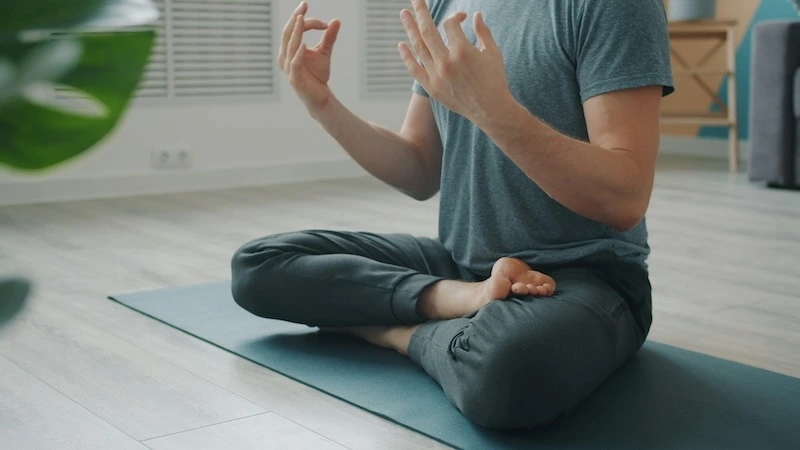
Person meditating quietly in a calm, softly lit space

How to Meditate for 10 Minutes a Day (And Why It Works)

Short answer Meditation is just paying attention — gently, on purpose — to one thing at a time. You don’t need to clear your mind, sit cross-legged, or buy anything. Ten minutes a day, sat in a normal chair, for two weeks, is enough to feel a real shift in stress, sleep and focus. Below: how to do it without any of the woo, what to expect in the first few sessions, what to do when your mind won’t shut up (it won’t — that’s normal), and a 14-day plan you can actually stick to.

Meditation has a bit of an image problem. For a lot of people it conjures up incense, cross-legged poses on a hardwood floor, and the suspicion that you’re supposed to “empty your mind” — whatever that means. There’s a vague sense that if you’re not vibrating at a higher frequency by the end of it, you’re doing something wrong.

The truth is much friendlier. Meditation is simply the practice of paying attention, gently, to one thing at a time. That’s the whole thing. And ten minutes of it, repeated daily, can quietly change the shape of your whole week.

What meditation actually is (and isn’t)

It isn’t about stopping your thoughts. Your thoughts will keep arriving — that’s what brains do. They produce thoughts the way a heart produces beats. Asking your mind to be empty is like asking your stomach to stop digesting. It’s not how the machine works.

The practice is much simpler: notice when your attention has wandered off, and quietly bring it back to whatever you’re focusing on. Usually that’s your breath. That tiny act — noticing, returning, noticing, returning — is the entire technique.

If you do that for ten minutes a day, you are meditating. Properly. Even if your mind wandered fifty times. Especially if your mind wandered fifty times.

Wandering and returning is the practice. Not the failure of the practice. The practice itself.

“But I can’t meditate — my mind is too busy”

This is the single most common objection we hear. It is also, ironically, the strongest possible reason to start.

If your mind feels busy — if you find yourself replaying conversations at midnight, mentally writing emails in the shower, or losing chunks of your day to anxious loops — you are exactly the person meditation was designed for. The busier the mind, the more useful the practice becomes.

People with calm, ordered minds don’t need meditation. They’ve already got the thing meditation is trying to teach. The rest of us — which is most of us — benefit precisely because we’re starting from chaos.

The misconception that “good meditators have quiet minds” is backwards. Good meditators have just as many thoughts as anyone else. They’ve simply learned a different relationship with those thoughts: noticing them, letting them pass, returning to the breath. The thoughts didn’t go away. They just stopped running the show.

Why it’s worth ten minutes a day

The research on regular meditation is robust enough that the NHS now lists it among its self-help recommendations for stress and anxiety. What the studies consistently find:

  • Lower baseline stress (measured by cortisol levels)
  • Improved sleep quality, particularly time-to-fall-asleep
  • Better focus and working memory
  • Reduced reactivity — the gap between a stressor and your reaction grows
  • Steadier mood, especially in people prone to low or anxious moods
  • Lower blood pressure with sustained practice

You don’t need to take anyone’s word for it. The deal you can offer yourself: ten minutes a day for two weeks. If nothing’s shifted by day fifteen, you’ve invested 140 minutes and lost nothing. If something has shifted — which it usually does — you’ve found a tool you can use for the rest of your life.

Most people report feeling a little less reactive and a little more present after a fortnight. That sounds modest until you live it. “Less reactive” means the email that would have ruined your morning doesn’t. “More present” means you actually taste your dinner. These are not small things.

A simple 10-minute starter

This is genuinely all you need. No app, no candle, no chanting.

  1. Sit comfortably. A chair is absolutely fine — better than a cushion, if you’re not used to floor sitting. Feet flat on the floor, hands resting in your lap, back relatively upright but not rigid.
  2. Close your eyes, or soften your gaze towards the floor a metre or so in front of you.
  3. Take three slower breaths to settle. In through the nose, out through the nose or mouth, slightly longer on the exhale.
  4. Let the breath return to normal. Don’t try to control it. Just notice it — the feeling of air at the nostrils, or the gentle rise and fall of the chest. Pick one of those and stay with it.
  5. When your mind wanders (it will, often, sometimes within five seconds), gently bring it back to the breath. No frustration. No commentary. Just “ah, wandered, back to the breath.”
  6. Carry on for ten minutes. Use a soft timer on your phone — an alarm with a gentle sound, not a klaxon.
  7. Open your eyes slowly when you’re done. Notice how you feel. Don’t leap straight into your phone.

What to expect in the first few sessions

Some honesty: the first few sessions might feel boring, or restless, or vaguely uncomfortable. This is normal and not a sign you’re bad at it.

Common first-week experiences:

  • Your mind feels busier, not quieter. It isn’t. You’re just noticing what was always there.
  • You feel sleepy. Your nervous system might genuinely be that tired. That’s information, not failure.
  • You feel restless or fidgety. Also normal. The urge to check your phone, scratch your nose or stand up will pass if you don’t obey it.
  • The ten minutes feels endless. Then suddenly, around day five or six, it doesn’t.
  • You feel emotional unexpectedly. Some people find that sitting quietly for the first time in years brings up feelings that were buried. This usually passes within a few sessions and is, gently, the point.
The unexpected gift of beginner meditation: The first time you notice your mind wandering and bring it back without getting annoyed at yourself, you’ve done something tiny but radical. You’ve made friends with your own attention. Everything in the practice is built on that single small moment, repeated.

Common stumbling blocks — and what to do

“I keep forgetting to do it”

The cure is habit-stacking: attach the meditation to something you already do without thinking. Right after your morning kettle boils. The first ten minutes after the kids leave for school. Right before bed, after teeth-brushing. New routines stick when they piggyback on existing ones.

“I fall asleep”

Either you’re very tired (which is information — sleep more) or you’re lying down to meditate. Sit upright. The slight effort of sitting keeps the system awake enough to do the practice without keeping it tense.

“Ten minutes feels too long”

Start with five. Genuinely. Three even. The number doesn’t matter compared to the consistency. Five minutes a day for thirty days will do far more than ten minutes once a week.

“My mind never settles”

It doesn’t need to. Re-read the section above. The practice isn’t a settled mind. It’s noticing the unsettled mind without being yanked around by it.

“I don’t know if I’m doing it right”

If you’re sitting quietly, returning your attention to the breath whenever you notice it’s wandered, and not punishing yourself for the wandering — you’re doing it right. That’s the whole technique. There is nothing more.

Morning or evening?

Either. Both, eventually, if you fall in love with it. But for starting out:

  • Morning tends to be better for people who want help with focus, mood and getting through busy days. It sets the tone before the day’s noise begins.
  • Evening tends to be better for people who struggle with sleep, evening anxiety, or carrying work home in their heads.

The honest answer: pick whichever time you’re more likely to actually do it. The best time of day is the one you’ll repeat.

A 14-day starter plan

If you want something structured to follow, this is the simplest plan that delivers results:

  • Days 1–3: 5 minutes a day, same time, same chair. Don’t aim for ten yet.
  • Days 4–7: 7–8 minutes a day. Same chair. Notice anything different yet?
  • Days 8–14: 10 minutes a day. By now the chair feels almost familiar.
  • Day 15: Reflect. Are you sleeping any differently? Reacting any differently? Most people say yes, in small but unmistakable ways.

If after two weeks the practice has done nothing for you, that’s rare but allowed — meditation isn’t for everyone, and there’s no moral failure in trying it and moving on. If it has done something, you now know how to give yourself ten minutes of calm whenever you need it. That’s a skill you carry forever.

When you want to go deeper

Once you’ve got a daily habit going, many people find guided experiences a brilliant next step. At Atlantis, our co-founder Sean has practised Reiki and meditation for over thirty years, including time lived and studying in China within the Esoteric Buddhist tradition under Master Yu Tian Jian.

His private Reiki sessions in Tiptree sit somewhere between meditation, deep relaxation and traditional energy work — a calm, grounding hour where you don’t have to do anything except let your nervous system settle. People often describe it as the first time in years they’ve actually switched off.

And if Reiki feels like a step further than you’re ready for, the gentler classes on our timetable — particularly Stretch Mobility & Core, Yoga and Fitness Yoga — build attention and breath awareness in a more familiar movement-based setting.

The small tip nobody mentions

Pair meditation with something you already do. The two minutes after you sit down with your morning cup of tea. The ten minutes before bed, after the dishes are done. The quiet half-hour after the school run when the house is still warm with everyone’s departure.

That’s where new habits actually stick. Trying to build a brand-new routine from cold is the part that usually fails. Anchoring it to a moment that already exists in your day is the cheat code.

A final permission slip

You don’t need a guru. You don’t need an app subscription. You don’t need to sit on the floor. You don’t need to believe in anything in particular. You don’t need to be calm before you start — the practice is the calming.

You just need ten minutes, a chair, and the willingness to keep returning your attention to your breath whenever it wanders. Which it will. Constantly. And that’s fine. That’s the whole thing.

Curious about meditation, Reiki, or a quiet hour to yourself?

Explore Reiki therapy with Sean at Atlantis Gym & Spa in Tiptree, or call us on 01621 816955 to talk about what might suit you. No pressure — just a conversation.

Learn About Reiki Sessions