
weight loss Archives - Atlantis | Tiptree

Gym Nutrition Without the Hype: What’s Actually Worth Doing

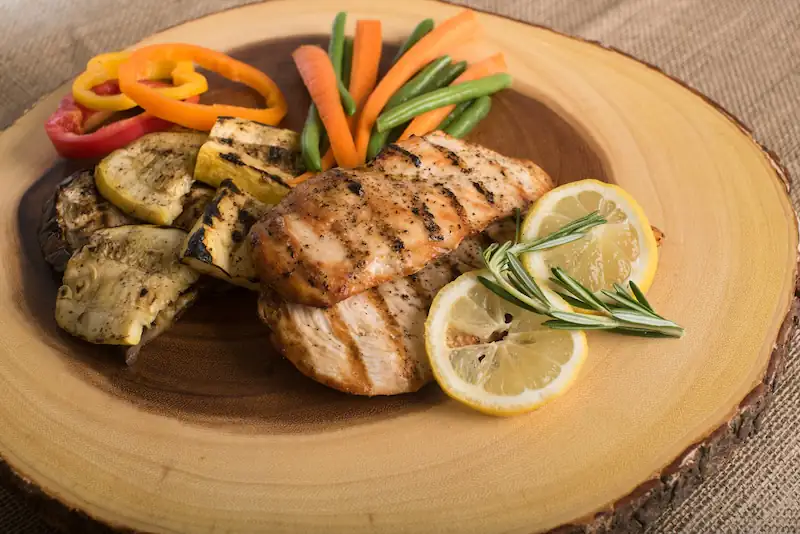
A simple, balanced healthy meal plate with protein and vegetables

Nutrition Basics: The 6 Rules That Actually Work

Short answer Ignore the noise. The boring truth is that good nutrition for most adults comes down to six things: protein at every main meal, mostly real food, steady hydration, sensible eating around training, honesty about alcohol, and consistency over perfection. Get those right 80% of the time and you’ve done 90% of the job. No powders, no detoxes, no Sunday-night despair required.

Nutrition advice online is a noisy, contradictory mess. One week it’s high-carb, the next it’s no-carb. Someone’s selling a powder for everything. A new “optimal” eating window. A new villain food. A new miracle fruit. The whole landscape is designed to keep you confused enough to keep buying things.

The good news: when you strip away the marketing, the actual basics are boring, simple, and largely unchanged for decades. Get these right and you’ve done about 90% of the job. The other 10% — fine-tuning macros, micro-managing meal timing, debating creatine doses — only matters if the 90% is already in place. Most people are still trying to optimise the 10% while their 90% is in shambles.

Here’s the honest version.

A note before we start: this is general guidance for healthy adults. If you have a medical condition, take medication, are pregnant, or have specific dietary needs, please speak to your GP or a registered dietitian. We’re a gym — not nutritionists. Anything that contradicts professional medical advice should be ignored.

1. Protein at every main meal

This is the single highest-leverage change most adults can make. Protein keeps you full, supports muscle repair after training, has the highest metabolic cost to digest (you burn calories just processing it), and is the macronutrient most of us under-eat by a long way.

The rough target: 1.6 to 2.2 grams of protein per kilogram of bodyweight per day, for active adults. A 70kg adult is looking at roughly 110 to 150 grams a day. That sounds like a lot until you build it into meals.

The simple version: a palm-sized portion at each main meal. Three palm-sized portions across breakfast, lunch and dinner gets most adults close to where they need to be.

What counts:

  • Chicken, turkey, lean beef, lean pork, fish (any of it)
  • Eggs (3–4 is a normal portion, not a heart attack)
  • Greek yoghurt, cottage cheese (high protein, easy)
  • Tofu, tempeh, edamame
  • Beans, lentils, chickpeas (lower protein per gram, so larger portions)
  • A protein shake counts but isn’t magic — it’s just convenient milk powder

If you do one thing from this article: add a palm of protein to your usual breakfast. Most adults eat almost none in the morning and then wonder why they’re ravenous by 11am.

Most people don’t need a new diet. They need more protein in the diet they already have.

2. Most of your plate from real food

If most of what you eat looks roughly like it did when it came out of the ground or off the animal, you’re winning. Lots of vegetables, some fruit, decent carbs (oats, potatoes, rice, bread), some fats (olive oil, nuts, avocado), and the protein from above.

Highly processed food isn’t poison. The mistake is treating it like it’s either virtuous or evil. It’s neither. It’s just engineered to be eaten in larger quantities than your body needs, and harder to feel good on.

The growing research on ultra-processed food suggests that how much of it you eat matters more than any single ingredient. People given identical-calorie diets eat noticeably more, and feel less satisfied, when the food is ultra-processed. The mechanism isn’t mystical — it’s just that processed food is designed to be overeaten. That’s its job.

The fix isn’t elimination. It’s ratio. Aim for most of your meals to come from a kitchen rather than a packet, most of the time. Don’t make rules you can’t keep.

3. Hydration is boring but it works

Tired in the afternoons? Headachy? Hungrier than you should be? Foggy by 3pm? Half the time, it’s just dehydration. Your body is bad at telling you it needs water — the signal often arrives as hunger or fatigue first, and thirst last.

Rough target: around 2 to 2.5 litres of fluid a day for most adults, more if you train hard or it’s hot. Tea and coffee count (the diuretic effect is overstated). Sugary drinks and alcohol don’t.

The trick isn’t the total — it’s the distribution. Steady intake through the day beats chugging a litre at 6pm and then waking up at 2am needing the loo. Keep a bottle on your desk. Bring one to the gym. It should be empty by the time you leave.

The cheap fix nobody talks about: A pinch of sea salt in your morning water makes a noticeable difference if you exercise regularly. Sweat takes electrolytes out, and most adults are eating less salt than their body actually needs. This isn’t a supplement. It’s just salt.

4. Eat around your workouts sensibly

You don’t need a perfectly timed pre-workout meal. You don’t need to hit a 30-minute “anabolic window” afterwards. The internet has spent twenty years inventing problems that the body has never actually had.

The simple version:

  • Before training: a small carb-heavy snack 1–2 hours before, if you’re hungry. A banana. A slice of toast with peanut butter. A small bowl of oats. If you’re not hungry, skip it.
  • After training: a proper meal with protein and carbs within a few hours. The recovery window is much longer than people think.
  • That’s it. The whole “nutrient timing” conversation for most of us.

The exceptions: if you’re training twice a day, or training for a serious event, or in a steep calorie deficit, timing starts to matter more. For the rest of us — the people training 3 to 5 times a week for general fitness, fat loss or muscle — eat enough across the day and the timing details largely sort themselves out.

5. Alcohol is the silent killer of progress

Not in a dramatic way. Just in a quiet, consistent one.

A few drinks in the evening reliably:

  • Wrecks the deep sleep that drives recovery
  • Increases hunger and cravings the next day
  • Reduces protein synthesis (the actual mechanism by which muscle is built)
  • Lowers training motivation for 24–48 hours
  • Adds liquid calories that almost nobody accounts for

You don’t have to be teetotal. But if your goals matter to you, this is the lever to be honest about. A pattern of three or four drinks several nights a week will quietly undo a lot of what your training is trying to build.

The realistic version for most adults: one or two nights a week with drinks, rather than five. If that feels hard, it’s worth knowing.

6. Consistency, not perfection

The all-or-nothing approach is what causes Sunday-night despair and Monday-morning detoxes. People eat “clean” for four days, break the rules at the weekend, declare themselves a failure, and start over the following Monday. The cycle gets less efficient every time.

Aim to eat well around 80% of the time and enjoy yourself the rest. That ratio is sustainable for the rest of your life. “Perfect” isn’t sustainable for a fortnight.

What 80/20 looks like in practice: across roughly 21 meals a week, 17 are mostly home-cooked, protein-led, real-food meals. The other 4 are takeaway, restaurant, social dinners, or whatever you genuinely enjoy. Nothing is “cheating.” Nothing is “off plan.” It’s just food.

What about supplements?

The honest answer: most people don’t need many. The supplements industry is worth tens of billions because it’s extraordinarily good at marketing, not because most of its products do much.

The few that have decent evidence and are genuinely worth considering for most adults:

  • Vitamin D — especially in winter in the UK. The NHS officially recommends supplementing October to March.
  • Creatine monohydrate — the most-studied performance supplement ever. 3–5g a day, cheap, well-tolerated, modest but real benefit for strength training. Also early evidence for cognitive function.
  • Protein powder — not a supplement, just convenient food. Useful if you struggle to hit protein targets from meals alone.
  • Omega-3 (fish oil) — if you don’t eat oily fish regularly.

Almost everything else — fat burners, detoxes, multivitamins, BCAAs, magic mushroom powders, anti-inflammatory blends — ranges from “does very little” to “literally nothing.” If a supplement claims to do something dramatic, it almost certainly doesn’t.

The myths to ignore

Things that are still being repeated in 2026 that you can safely retire:

  • “Carbs make you fat.” Calories make you fat. Carbs are calories. So are fats and protein. If you’re in a calorie deficit, the macronutrient split has very little effect on fat loss.
  • “Eating fat makes you fat.” See above. Dietary fat is calorie-dense, but it’s also extraordinarily satiating. Olive oil, nuts, avocado, fatty fish — all fine, all useful.
  • “Eating after 7pm causes weight gain.” The body doesn’t have a clock that switches calorie storage on at sundown. Total daily intake matters; timing is mostly irrelevant for fat gain.
  • “You need to eat six small meals a day.” You don’t. Two, three, four or five meals all work. Pick what fits your life.
  • “Detoxes clean out your system.” Your liver and kidneys do that. They’ve been doing it your whole life. They don’t need a juice cleanse.
  • “Gluten is bad for everyone.” Unless you’re coeliac or have a confirmed sensitivity, it isn’t. The fashion has moved on. Bread is fine.

What a sensible day actually looks like

To make this concrete, here’s a normal day’s eating for an active adult who’s training a few times a week. Nothing fancy. Nothing photographed.

  • Breakfast: 3 eggs scrambled with spinach, slice of wholegrain toast, a coffee.
  • Mid-morning (optional): Greek yoghurt with berries, or an apple with peanut butter.
  • Lunch: Chicken or salmon salad with mixed leaves, olive oil, half an avocado, a bread roll if you’re hungry.
  • Pre-workout snack: Banana, or a small bowl of oats with honey.
  • Dinner (post-workout): Lean mince bolognese with wholemeal pasta and a side salad. Or chicken stir-fry with rice. Or salmon with roast potatoes and broccoli.
  • Through the day: 2–2.5 litres of water, a couple of cups of tea or coffee, no alcohol.

That’s it. Protein at every meal. Real food most of the time. Hydration through the day. No drama. No counting. No guilt.

Pair it with proper training

Nutrition and training work together, not separately. Eating well without training will improve your health but won’t change your body composition. Training hard without eating well will produce frustrating, slow results. Both, together, are how progress actually happens.

Our Workout Library gives you structured sessions to actually use what you’re eating — full-body strength, conditioning, push/pull/legs splits, beginner plans. Pair it with the six rules above and you’ve got the whole picture.

Want a training plan to match your eating?

Every Atlantis member gets a free health appraisal and tailored programme — built around your goals, your week, and where you’re realistically starting from. Call 01621 816955 or visit us on Chapel Road, Tiptree.

See Memberships
Best Gym Workouts for Fat Loss in 2026

gym workouts for fat loss. plate with the words 'weight loss' on it. atlantis tiptree

The Best Gym Workout for Fat Loss (2026 Guide)

Short answer There isn’t one. Fat loss comes from a sustained calorie deficit, not a magic exercise routine. The workout that works best is one that builds or protects muscle, raises your daily energy expenditure, and that you’ll actually repeat every week for six months. Two strength sessions, one steady cardio, one harder conditioning piece, and walking more is the framework that delivers — the rest is consistency, food and sleep.

If you’ve searched for the best gym workout for fat loss, what you’re probably hoping for is a magic combination of exercises that melts fat off specific areas in record time. That’s not a criticism — it’s human. We want results, we want them quickly, and the fitness industry has spent forty years convincing us that the right workout is the missing piece.

The uncomfortable truth is that the workout is one of four things that drive fat loss, and arguably the least important of the four. The other three — nutrition, daily movement outside the gym, and sleep — usually matter more. That’s not a reason to skip the workout. It’s a reason to stop expecting the workout to do all the work.

What actually causes fat loss

Body fat is stored energy. Your body holds onto it for situations where food might be scarce — situations that, for most of us in Tiptree and the rest of modern Britain, never actually happen. To lose body fat, you need to spend more energy than you take in, consistently, for long enough that your body has to dip into its reserves to make up the difference.

That’s it. That’s the only mechanism. Everything else — the protocols, the splits, the supplements, the influencer routines — is just different ways of trying to nudge that one equation in the right direction.

The reason there isn’t a single best workout is that workouts contribute only one part of the equation: energy spent in the gym. A 60-minute weights session burns somewhere between 250 and 400 calories. A hard cardio session might burn 400 to 600. That’s not nothing — but it’s a Mars bar and a packet of crisps. The food you put in your body, and the movement you do across the other twenty-three hours of the day, dwarf what happens in any single workout.

Why strength training beats cardio for fat loss

This is going to surprise people who’ve been told for decades that cardio is the fat-loss exercise. It isn’t, and the reason is muscle.

Muscle tissue is metabolically active. It costs your body energy to maintain, even when you’re sitting on the sofa watching the football. The more muscle you carry, the higher your resting metabolic rate — meaning you burn more calories doing absolutely nothing.

When people lose weight through cardio alone and aggressive dieting, they tend to lose a frustrating amount of muscle along with the fat. Their body becomes smaller but also less metabolically active, which is exactly what makes weight regain so common. The classic “lost twenty pounds, gained back twenty-five” cycle is largely a story of lost muscle followed by regained fat.

Strength training while in a calorie deficit protects muscle. Done right, it can even add muscle while you’re losing fat — particularly if you’re new to lifting. The result is a body composition change that lasts: less fat, more muscle, higher metabolism, better shape, stronger frame.

If you only have time for one type of training to support fat loss, lift weights.

The four-day fat loss training week

Here’s a framework that works for the vast majority of people, beginner through intermediate:

  • Day 1: Full-body strength session (45–60 minutes) — squat or leg press, chest press, lat pulldown, Romanian deadlift, shoulder press, plank
  • Day 2: Steady cardio (30–45 minutes) — incline treadmill, bike, rower or cross trainer at a moderate pace
  • Day 3: Full-body strength session (45–60 minutes) — same pattern, different exercises or rep ranges
  • Day 4: Intervals or circuit (25–40 minutes) — SkiErg/rower intervals, a mixed-equipment circuit, or punch-bag conditioning

Across the week: two strength sessions, one steady cardio, one harder conditioning piece. Three of those four pieces already exist in the Atlantis Workout Library under their proper names — Full-Body Strength & Fitness, Steady Stamina Builder, SkiErg & Rower Intervals and the Calorie-Burn Circuit. Pick, rotate, repeat.

The trick is consistency. A perfect plan you do for three weeks loses to a slightly imperfect plan you do for six months. Every time.

What good cardio looks like — and what to skip

Cardio absolutely belongs in a fat-loss plan, but not for the reasons most people think. Cardio doesn’t burn fat directly while you’re doing it (that’s not how it works metabolically), and it doesn’t “boost your metabolism” in any meaningful long-term way. What it does is:

  • Add to your daily calorie expenditure
  • Improve heart and lung fitness, so you can do more in the gym
  • Improve recovery from strength sessions
  • Help with hunger regulation and stress, which makes nutrition easier

Cardio that helps

  • Steady incline walking — kind to the joints, easy to repeat, can be done while listening to a podcast. Massively underrated. The incline treadmill at Atlantis is one of our most-used machines for exactly this reason.
  • Rowing — full body, low impact, scales from gentle to brutal depending on effort
  • Cycling (bike or outdoor) — recoverable, joint-friendly, great for high volume
  • Short intervals — once or twice a week, no more. The 80% rule: if it leaves you wrecked, you did too much.

Cardio that doesn’t

  • Hours of slow steady-state when you’re already tired and under-recovered
  • Punishing HIIT five days a week — your nervous system can’t recover, your strength sessions tank, and you end up doing everything badly
  • Cardio as punishment for what you ate — psychologically corrosive and rarely sustainable

The secret weapon: walking

NEAT stands for non-exercise activity thermogenesis. It’s a technical name for every calorie you burn that isn’t from a workout — walking around the house, fidgeting, standing up to make tea, climbing the stairs, walking the dog, mowing the lawn.

For most people, NEAT burns three to five times more calories per day than their gym workout does. It is the single most overlooked lever in fat loss.

The practical version: hit 8,000 to 10,000 steps a day. Don’t drive somewhere you could walk. Take the stairs. Park further away. Walk during phone calls. Walk after meals. None of these things feel like fitness. All of them add up.

If you do nothing else from this entire article: Walk more. Step counts in the 8–12k range, sustained for months, have outperformed structured cardio programmes in multiple weight-loss studies. It’s also the cheapest, least demanding, most enjoyable form of exercise on the planet.

The food bit (you knew it was coming)

You can’t out-train poor nutrition. Not in your twenties, definitely not in your forties. This article is about training rather than eating, so the short version:

  • Protein matters most. Aim for around 1.6 to 2.2 grams per kilogram of bodyweight per day. It keeps you full, protects muscle, and has the highest metabolic cost to digest.
  • Eat mostly whole foods. Not because processed food is evil, but because whole foods are harder to overeat. A 200-calorie apple takes longer to eat than a 200-calorie biscuit.
  • You don’t need to count calories forever. But you should count them for a fortnight to learn what you’re actually eating. Almost everyone underestimates by 30% or more.
  • Don’t drink your calories. Especially alcohol. It’s the silent destroyer of fat-loss progress.

The mistakes that kill fat loss progress

  • Switching workouts every week looking for “the right one” — you can’t progress what you don’t repeat
  • Endless cardio at the expense of strength — see the muscle argument above
  • Eating like you’re in a deficit at home and like you’re on holiday at weekends — averages out to maintenance
  • Sleeping six hours a night — wrecks hunger hormones, wrecks recovery, wrecks willpower
  • Measuring progress only on the scales — water-weight fluctuations swamp real fat loss day to day. Use photos, measurements, and how clothes fit.

What we see at Atlantis

The members at our gym in Tiptree who change their body composition over a year aren’t the ones doing the most extreme workouts. They’re the ones who turn up three or four times a week, every week. They lift weights. They walk most days. They get most of their food right, most of the time. They sleep. They give it months, not weeks.

The members who don’t see results are usually the ones who throw themselves at fat loss like a war for six weeks, burn out, vanish for two months, then start again from scratch in January. It’s the classic on-and-off cycle, and it never delivers.

The boring path beats the dramatic one every time.

A four-week starter plan

If you’re new to all this and want a structured place to begin, here’s a complete plan you can run at Atlantis straight away. Repeat it weekly for the full month, then reassess.

  • Monday: Full-Body Strength & Fitness (from the Workout Library)
  • Tuesday: 30-minute incline treadmill walk + 5-minute core finisher
  • Wednesday: Rest, or a class like Stretch Mobility & Core from the timetable
  • Thursday: Full-Body Strength & Fitness, alternate exercises
  • Friday: Steady Stamina Builder — 35 minutes on a machine of your choice from the Gym-Apedia
  • Saturday: Calorie-Burn Circuit OR a Boot Camp class
  • Sunday: Walk outdoors for 45+ minutes

Walk every other day. Eat protein at every meal. Track your food for the first two weeks. Repeat the same plan for the full month. Reassess at the end.

Want help putting this into practice?

Atlantis members get a staff team who’ll walk you through any of the workouts above and help you set up the equipment safely on your first attempt. We’ve been doing this for over twenty years in Tiptree — we’ve seen every kind of fat-loss journey there is.

See Membership Options