
Family Swimming Tiptree

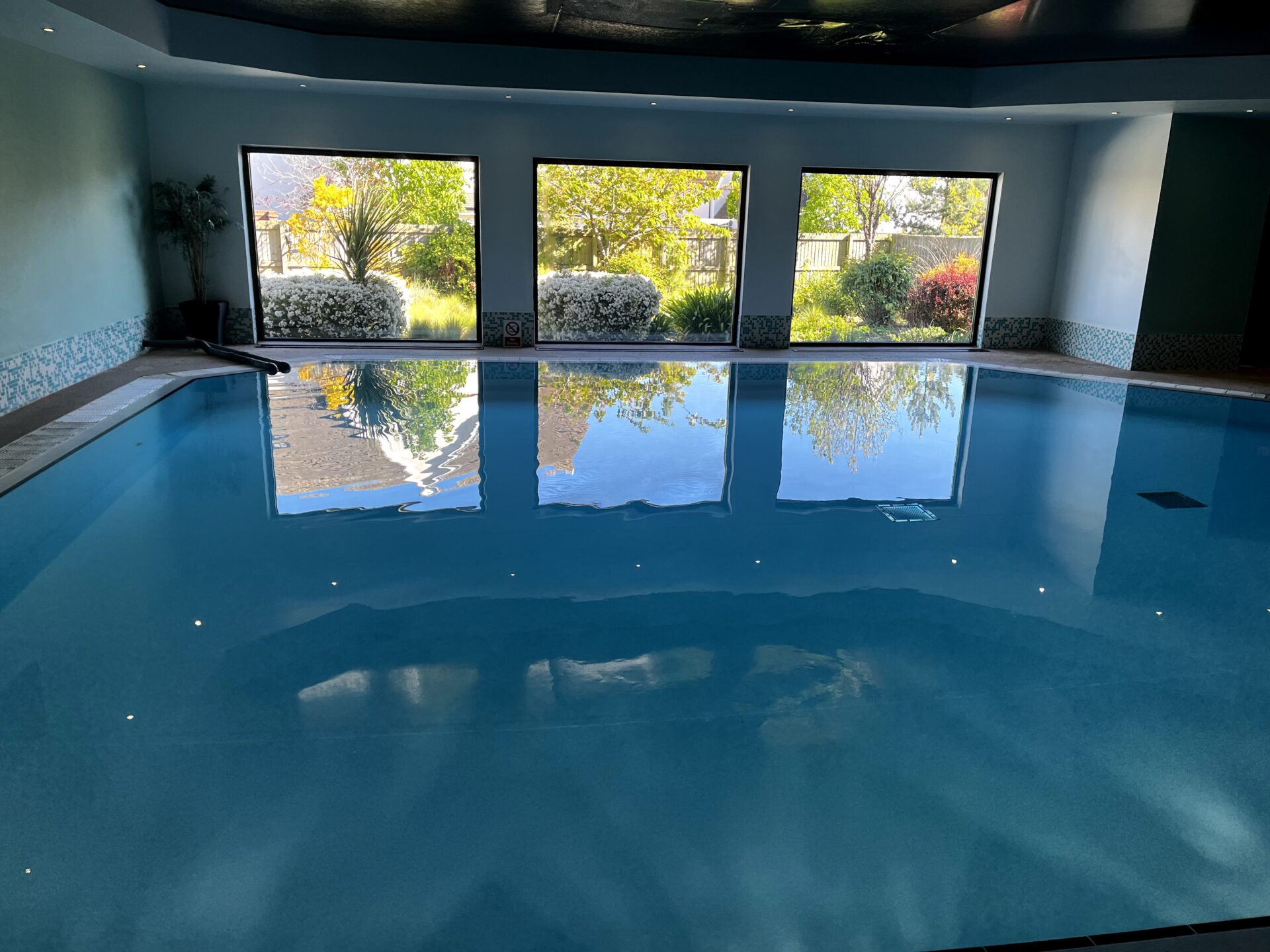
the pool at atlantis gym, health and beauty spa in tiptree essex

Family Swimming in Tiptree: When You Can Swim, and How It Works

Short answer Family swim at Atlantis runs Monday to Friday, 4:00–5:30pm, and Saturday and Sunday, 12:00–1:30pm. Children are welcome in the pool when they’re with an adult. You don’t need to book a slot for family swim — unlike our regular pool sessions, you just come along during those times. The pool is indoors, heated to a comfortable 30°C, and open all year. There’s free parking right outside, and it’s all a great deal calmer than the drive into Colchester.

The summer holidays land this week, and with them comes the question every parent in Tiptree starts asking around the second wet afternoon: where can we actually take the kids swimming?

It’s a fair question. Around here, swimming usually means a drive — loading everyone into the car, finding somewhere to park, and joining whatever’s going on at a big public pool on a rainy Tuesday in August. For a forty-minute swim, that’s a lot of afternoon gone.

So it’s worth knowing there’s a heated indoor pool on Chapel Road, in the middle of the village, with family swim sessions every single day of the week. Here’s how it works.

Family swim times

These are the times children can be in the pool, accompanied by an adult:

Family swim at Atlantis
Monday to Friday4:00pm – 5:30pm
Saturday & Sunday12:00pm – 1:30pm

The weekday session lands right after school, which is deliberate — it’s the slot that works for pick-up, swim, home for tea. In the holidays it’s simply the same time every afternoon, which makes it easy to build a week around.

Weekends are a ninety-minute session over lunchtime, Saturday and Sunday both. If you’re coming during a bank holiday or over Christmas and Easter, give us a ring on 01621 816955 first — those weeks can run differently.

You don’t need to book family swim

This is the bit that catches people out, because it works differently to the rest of our pool timetable.

Normally, our swimming pool runs on booked 40-minute sessions with a maximum of five people in the water at any one time. You ring up, you get your slot, and you swim without anyone else’s elbows in your way. It’s one of the nicest things about the place, and it’s the opposite of how a big leisure centre works.

Family swim is the exception. Those sessions aren’t bookable slots — they’re set times given over to families, so you come along during the window rather than reserving a place in advance. If you’re not sure whether a particular afternoon suits, ring the desk and ask. We’re a fairly relaxed bunch and we’d far rather you rang than guessed.

Normal pool sessions: booked, forty minutes, five people maximum. Family swim: just come along during the times.

Why a small pool suits nervous swimmers

There’s a particular kind of child who does not enjoy a big public pool. The noise bounces. The water’s cold enough to make them go rigid on the first step. There are teenagers bombing in at the deep end. Everything about it says this is not a place to be uncertain in, which is unfortunate, because uncertain is exactly what a learning swimmer is.

Ours is a different sort of room. It’s indoors, it’s quiet, and at 30°C it’s genuinely warm — warm enough that a child who normally lasts ten minutes before their lips go blue will happily stay in for the whole session. That single fact does more for a nervous swimmer’s confidence than any amount of encouragement from the side.

It’s calm, too. Nobody’s queuing for a lane. There’s no whistle. If your child wants to spend forty minutes standing in the shallow end getting used to the idea, that’s a perfectly good use of the session, and nobody will hurry them along.

Worth knowing: The sauna, steam room and jacuzzi stay open as normal during family swim. So if there are two adults and only one of you is on splash-duty, the other one isn’t just sitting on a plastic chair holding the towels.

What to bring

  • Swimming things and a towel each. The obvious one, and the one that gets forgotten at the door.
  • Armbands or floats if your child uses them — bring your own so you know they fit.
  • Something for after. Swimming makes children ravenous in a way that has to be experienced to be believed.
  • A bit of patience for the first visit. New pool, new changing rooms, new everything. The second visit is always easier than the first.

Parking is free and it’s right outside, which sounds like a small thing until you’ve tried to walk two damp children back to a car park in the rain.

Can we come if we’re not members?

Give us a ring and ask — 01621 816955. It’s genuinely the quickest way to get a straight answer, because it depends a bit on what you’re after and how often you’d like to come.

If it turns out you’d be swimming most weeks, it’s worth asking about the membership options while you’ve got us on the phone. There’s a Family Membership covering a family unit of adults and dependents, which is priced on request so we can work it out around your actual family rather than a made-up average one. There’s a Joint Membership for two at £94.95 a month on a 12-month agreement. And there’s a Spa Only option if it’s the pool, sauna, steam room and jacuzzi you want rather than the gym — not everybody wants to lift weights, and that’s absolutely fine by us.

You’re also very welcome to come and have a look round before you decide anything. No appointment needed, no sales pitch waiting for you — pop down whenever suits and we’ll show you the place. If you’d rather come at a particular time, ring ahead and we’ll make sure someone’s free.

Where we are

Atlantis Gym & Spa, 14 Chapel Road, Tiptree, Essex, CO5 0RA — in the village, with free parking outside. We’re an easy run from Kelvedon, Feering, Witham, Maldon, Coggeshall and Colchester, and we’ve been family-run here since 2005.

Our full opening hours are Monday to Friday 6:30am–9:00pm, Saturday 9:00am–6:00pm and Sunday 9:00am–3:00pm. We ask everyone to be out of the facilities half an hour before closing.

The honest bottom line

Six weeks is a long time to fill. A warm indoor pool ten minutes from your front door, open every afternoon, with a set time that doesn’t change and no slot to remember to book, is a genuinely useful thing to have in your back pocket around the middle of August.

It won’t entertain them for the entire summer. But it’ll comfortably see off a wet Wednesday, and they’ll sleep like the dead afterwards.

Common questions

What are the family swim times at Atlantis?

Family swim runs Monday to Friday, 4:00–5:30pm, and Saturday and Sunday, 12:00–1:30pm. Children are welcome in the pool during those times when they’re accompanied by an adult.

Do I need to book family swim?

No. Family swim isn’t a bookable slot — you just come along during the times above. Our regular pool sessions are different: those run as booked 40-minute slots with a maximum of five people in the water, arranged by phone.

How warm is the swimming pool?

The pool is indoors and heated to a comfortable 30°C, open all year round. It’s warm enough that children happily stay in for the whole session.

Can the sauna, steam room and jacuzzi be used during family swim?

Yes. The sauna, steam room and jacuzzi all stay open as normal during family swim sessions.

Fancy a swim this week?

Family swim runs every day — Monday to Friday 4:00–5:30pm, and 12:00–1:30pm at weekends. Ring us on 01621 816955 with any questions, or just pop down to Chapel Road and have a look at the place first. We don’t mind which.

Get in Touch
Reiki Explained: What Actually Happens in a Session (and Why People Come Back)

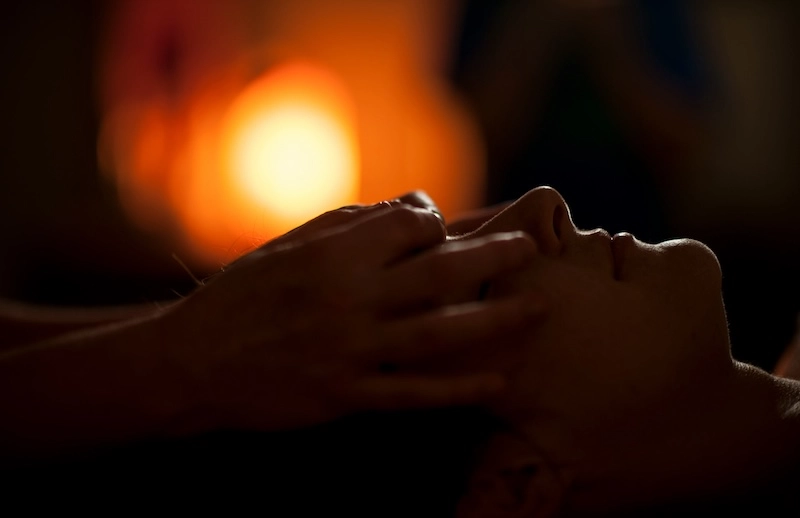
Calm, quiet Reiki treatment room at Atlantis Gym and Spa Tiptree

What Is Reiki? An Honest Guide (And What to Expect)

Short answer Reiki is a Japanese complementary therapy focused on relaxation, stress reduction and emotional wellbeing. A session is a quiet, peaceful, hour-long experience where the practitioner uses gentle hands-on or hands-near techniques while you lie comfortably. It isn’t medical treatment, it isn’t religious, and you don’t need to believe anything in particular. Most people leave feeling unusually calm, settled and clear-headed.

Reiki is one of those things that’s hard to describe until you’ve tried it. “Energy work” sounds either too mystical or too vague, depending on who’s reading. People who’ve never had it picture incense and chanting. People who’ve had it once tend to book a second session and stop trying to explain it to anyone else.

So in plain English: it’s a quiet, hour-long session that leaves most people feeling unusually calm, settled and clear-headed. There’s nothing dramatic about it. Nothing weird is going to happen. You don’t need to chant, breathe in any special way, or believe in anything in particular.

Here’s what’s actually going on, and what to expect if you’re considering trying one.

The short version

Reiki is a Japanese complementary therapy focused on relaxation, stress reduction and emotional wellbeing. The name comes from rei (universal) and ki (life energy). It was developed in 1922 by Mikao Usui in Japan and has been practised continuously ever since — both in the East as part of a longer wellness tradition, and in the West as a recognised complementary therapy.

During a session, the practitioner uses gentle hands-on or hands-near techniques while you lie comfortably, fully clothed. Most people describe the experience as peaceful, grounding and restorative. Some people feel warmth or a light tingling. Some drift into a half-asleep meditative state. Others just feel deeply still. None of those experiences is more “correct” than the others.

What it consistently delivers, across people who’ve tried it, is a noticeable shift towards calm. Many describe it as the first time in a long while they’ve actually switched off.

An hour of properly held, undisturbed quiet has become genuinely rare in modern life. Reiki gives you one.

What it isn’t

Worth being clear about. Reiki isn’t:

  • A medical treatment. It’s not a substitute for medical care and shouldn’t be used as one. If you have a health condition, see your GP. Reiki is complementary — it sits alongside conventional care, not instead of it.
  • Religious. Despite its Japanese roots and the language around energy, Reiki itself isn’t tied to any belief system. People of any faith or none can have a session without any conflict.
  • Dramatic. Nothing weird is going to happen. You won’t see visions or be asked to do anything strange. The whole experience is calm and gentle by design.
  • Require you to believe in it. One of the things skeptics often discover is that the relaxation effect happens whether you’re a true believer or a quiet doubter. You don’t have to subscribe to anything to benefit from an hour of held stillness.

What about the science?

Here’s the honest position. The research on Reiki itself is mixed — some small studies show measurable effects on stress, anxiety and pain perception, others show effects no greater than relaxation alone. What’s clearer is that one hour of held, undisturbed quiet in a calm room reliably reduces cortisol, lowers heart rate and improves subjective wellbeing in almost everyone. Whether the additional effects of Reiki specifically are doing something further is an open question.

What we’d say plainly: the people who book sessions with Sean don’t come for a debate about mechanism. They come because they leave feeling better, and they keep coming back because that effect is reliable. That’s the practical reality, regardless of how you choose to explain it.

The NHS recognises Reiki as a complementary therapy and notes that it can support relaxation and stress reduction. It is not, and should not be presented as, a treatment for medical conditions.

What a session at Atlantis is like

Our co-founder Sean has been practising Reiki and meditation for over thirty years. He lived and studied in China under Master Yu Tian Jian within the Esoteric Buddhist tradition, which gives his approach a depth and quiet authority you don’t always find with shorter-trained practitioners. Sessions are private, in a peaceful room at Atlantis in Tiptree, and last around an hour.

Before

You’ll have a short, relaxed chat with Sean. He’ll explain what’s going to happen, answer any questions, and ask you a few simple ones — how you’ve been feeling, whether there’s anything specific you’d like the session to focus on, whether you’d prefer to lie down or sit. There’s no form to fill in. No clinical setup. It’s a conversation.

During

You lie down on a treatment table, with a blanket if you’d like one. Shoes off. Phone away. The room is quiet, dimly lit, with soft background sound if that suits you. Sean works calmly with hands-on or hands-near techniques, moving slowly around the body.

What you experience varies. Some people drift in and out of a very relaxed, almost meditative state. Some feel warmth in different areas, or a light tingling. Some report feeling unusually heavy or weightless. Some simply feel still in a way they haven’t for months. Some fall asleep. All of these are normal. None is “correct.”

What you won’t experience: anything that requires you to do anything. You’re not asked to focus, visualise or concentrate. The whole session is one where nothing is being asked of you.

After

Sean will give you a few quiet minutes to come back to yourself. Most people like some water and don’t want to rush straight back into a busy schedule. The calm tends to linger — many clients say their sleep is noticeably better that night, and that they wake up feeling clearer the next day.

Some people feel emotional unexpectedly after a session. That’s also normal. An hour of genuine stillness often surfaces things that the busy version of you was holding down.

Common questions from first-timers

“What if I can’t lie still for an hour?”

Almost everyone worries about this. Almost no one has the problem. By 10 minutes in, your nervous system has settled enough that the hour passes quickly. If you genuinely can’t lie down comfortably, sessions can be done seated.

“What if I’m skeptical?”

Plenty of Sean’s regular clients started skeptical. The relaxation effect doesn’t care what you believe. You’re welcome to think of it as “a quiet hour with someone who’s practised holding silence for thirty years” if that’s easier. The benefit shows up either way.

“Do I have to talk about anything?”

No. Reiki isn’t a therapy in the talking-to-someone sense. You don’t need to explain what’s going on in your life. You don’t need to share anything you’re not comfortable sharing. The brief chat at the start is just to make sure you’re comfortable, nothing more.

“How often should I come?”

That’s entirely up to you. Some people come once and that’s enough for a particular stretch of life. Some come monthly as part of their recovery routine. Some come weekly during especially demanding periods. There’s no protocol — it depends what you need.

“Can I do it if I’m pregnant / on medication / have a health condition?”

Reiki is very gentle and is generally considered safe in most circumstances, but please mention anything relevant when you book so Sean can take it into account. As above, it’s complementary — not a substitute for medical advice.

“What should I wear?”

Comfortable clothes you can lie down in. That’s it.

How Reiki differs from massage and meditation

People sometimes ask which of the three would suit them best. Quick translation:

  • Massage works on muscles and soft tissue physically. You’re typically undressed, and the practitioner is actively manipulating your body. Great for muscular tension and physical recovery.
  • Meditation is something you do yourself. The benefit comes from your own practice, repeated over time. Free, accessible, and powerful — but requires discipline.
  • Reiki sits in between. You’re fully clothed and passive, like in meditation. But you’re being held in stillness by someone else, like in massage. You don’t have to find the calm yourself — the session brings it.

For people who want to meditate but find it hard to do alone, Reiki is often the bridge. For people who’ve done a lot of massage and want something more for the nervous system than the muscles, it’s a different kind of restoration.

What people actually say

The Reiki page includes a handful of client comments — words like “totally relaxed,” “almost euphoric,” “more like me again” come up often. The throughline isn’t anything mystical. It’s that an hour of properly held, undisturbed quiet has become genuinely rare in modern life, and people feel the absence of it long before they realise that’s what they’re missing.

One client described it as “an hour where my brain finally stopped doing the thing.” That’s probably the most honest review we’ve had.

Who tends to book a session

  • People going through a stressful patch who need somewhere to land
  • Anyone curious about meditation but who’d rather be guided into stillness than try to find it alone
  • Members who use the gym hard and want a deeply restorative recovery experience
  • People who simply want an hour where nothing is asked of them
  • Adults dealing with grief, anxiety, sleep issues or a period of overwhelm
  • Curious skeptics who’ve heard friends rave about it and want to find out what the fuss is
The unexpected demographic: A surprising number of Sean’s regular Reiki clients are men in their 40s and 50s — people who would never have walked into a yoga class but who’ve found that an hour of private, structured calm is the recovery their nervous system has been quietly begging for.

After your first session: what to expect

The hours after a Reiki session vary. Most people feel calm and slightly “floaty” for the rest of the day. Most sleep noticeably better that night. Some feel a small wave of emotion arrive a few hours after the session — this passes, and is usually the system processing things it was holding.

The next day, people often report feeling clearer, more present, less reactive. The effect is gentle but real. Some people describe the week after a session as “just slightly easier to be in.”

Practical details

A one-hour private session with Sean is £60, at Atlantis Gym & Spa in Tiptree — easy to reach from Colchester, Maldon, Witham, Kelvedon and across mid-Essex. Reiki is open to members and non-members alike. You don’t need to be a regular at the gym to book.

If you’ve been curious for a while and just haven’t got round to it, this is your gentle nudge.

To book a session, or ask any question

See the full Reiki therapy page for more, or call Atlantis on 01621 816955. No pressure, just a conversation — Sean is happy to answer anything before you decide whether to book.

Learn About Reiki Sessions