
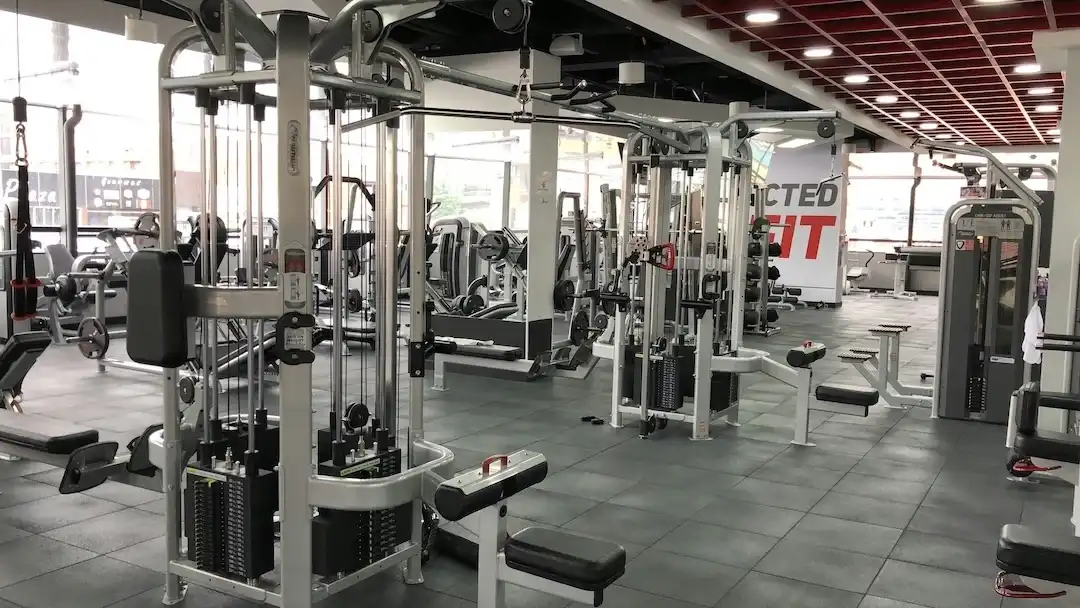
Answered: Can you build muscle with Gym Machines?

Build muscle using gym machines at Atlantis Gym in Tiptree, Essex

Can You Build Muscle Using Just Gym Machines? (Yes — Here’s How)

Short answer Yes. Absolutely yes. You can build muscle using gym machines just as effectively as with free weights when you program it properly — sometimes more effectively for beginners and intermediate lifters. The myth that “real” training requires barbells is gym-culture snobbery, not science. Below: why machines work, when they’re actually better than free weights, and a complete machine-only muscle-building plan.

Walk into almost any gym and you’ll find two tribes. The free-weight tribe, who view machines as a sort of training cheat code reserved for people who don’t know any better. And the machine tribe, who like exercises they can do without dropping a 25kg plate on their foot.

The free-weight tribe is louder. They also tend to be wrong about the central claim — that you need barbells and dumbbells to build a serious physique. The research is in: you can build muscle using gym machines just fine. End of debate.

Now, let’s talk about why.
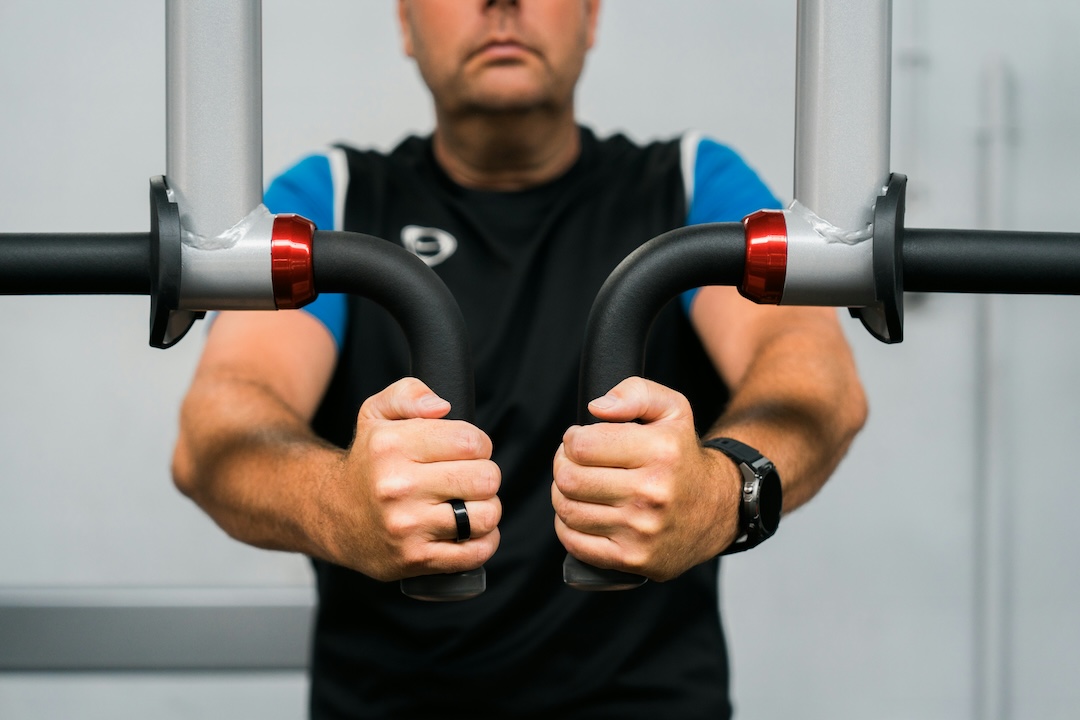
A man building muscle using gym machines at Atlantis Gym in Tiptree, Essex

The myth: “real lifters use free weights”

This idea comes from old-school bodybuilding culture, where compound barbell movements (squats, deadlifts, bench press, overhead press) were the foundation of every training plan. They still are, for good reason. They’re excellent exercises.

But the idea that they’re the only path to muscle is a cultural belief, not a physiological truth. Your muscles don’t know whether the resistance they’re working against is a barbell, a dumbbell, a cable, or a pin-loaded machine. They know whether they’re being challenged hard enough, often enough, to need to grow.

Provided that challenge is sufficient, the equipment is mostly irrelevant.

What the science actually shows

Multiple meta-analyses comparing machine-based and free-weight-based training have found that, when total training volume and effort are matched, the muscle growth between groups is statistically the same.

You read that right. Same.

The variables that actually matter for muscle growth are:

  • Training close to muscular failure (the last few reps need to be hard)
  • Enough total volume per muscle group across the week (roughly 10–20 working sets)
  • Progressive overload over time (adding weight, reps, or sets)
  • Enough protein in your food
  • Enough sleep to recover

None of those variables specify free weights. Machines tick every one.

Your muscles don’t know whether the resistance is a barbell or a machine. They only know how hard they’re being challenged.

When machines are actually better than free weights

This is the part nobody on YouTube tells you. There are several scenarios where machines aren’t just “fine” — they’re objectively the better tool for the job.

1. When you’re new to training

Free weights demand stability and technique. Machines control the movement path for you, which means you can focus on muscle contraction rather than balance. Beginners build muscle faster on machines because they can train closer to failure without form falling apart.

2. When you’re training alone

No spotter? Pressing a heavy barbell to your chest without a way to bail safely is genuinely dangerous. A chest press machine has none of that risk. The bar physically can’t fall on you. You can push to failure with confidence.

3. When you want to isolate a specific muscle

Cable kickbacks for glutes. Leg curls for hamstrings. Lateral raises with a machine’s consistent resistance curve. These are not compromises — they’re tools designed to target one muscle without others taking over.

4. When you’re carrying an injury

Sore lower back? You’re probably not deadlifting this week. The leg press, leg curl, leg extension and seated calf raise let you keep training legs hard without loading the spine. That’s a feature, not a fallback.

5. When you’re training to failure

Going to true muscular failure on free weights is dangerous and often impractical — particularly on squats, deadlifts and overhead lifts. Machines let you push to failure repeatedly without the same risk. For hypertrophy, that’s a real advantage.

When free weights win

To be fair to the other tribe, free weights do have genuine advantages in specific scenarios:

  • Heavy compound strength work — nothing beats a barbell squat or deadlift for raw maximum strength
  • Sport-specific power — athletes training for performance benefit from free-weight movements that mimic real-world force production
  • Core stabilisation as a byproduct — standing free-weight work demands trunk bracing in a way machines don’t
  • Dumbbell work for unilateral training — spotting strength imbalances between sides

The honest position is that both are tools. The best programmes use both, picking each one for the job it does best. A machine-only programme can absolutely build a great physique. So can a free-weight-only programme. So can a combined programme.
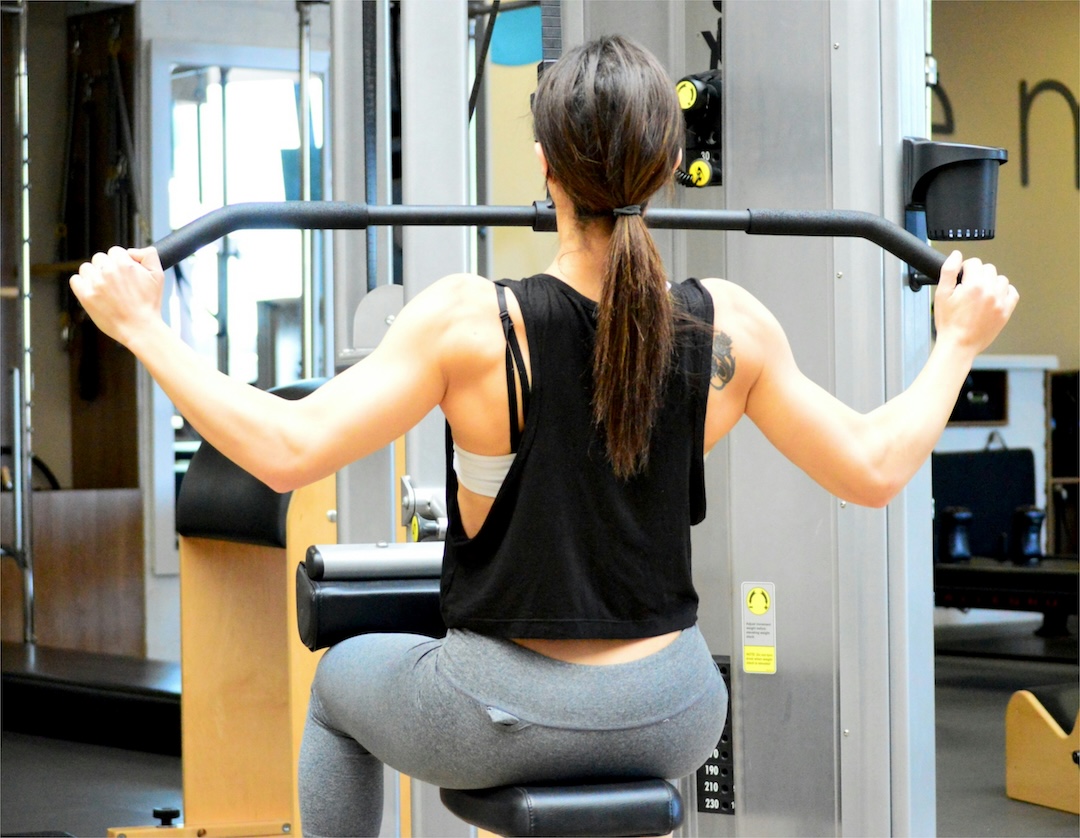
Woman using the lat pulldown machine to build muscle at Atlantis Gym in Tiptree, Essex

A complete plan to build muscle using gym machines

If you want to give machine training a serious test for 3 months, here’s a plan that hits every major muscle group across two sessions a week. Repeat each session twice per week (so you’re in the gym four times).

Session A — Upper Body

  • Chest press machine: 4 x 8–12
  • Lat pulldown: 4 x 8–12
  • Shoulder press machine: 3 x 8–12
  • Seated row: 3 x 10–12
  • Chest fly machine: 3 x 12–15
  • Bicep machine: 3 x 10–12
  • Cable tricep pressdown: 3 x 10–12

Session B — Lower Body + Core

  • Leg press or Smith squat: 4 x 8–12
  • Leg curl machine: 4 x 10–12
  • Leg extension: 3 x 12–15
  • Hip abductor: 3 x 12–15
  • Cable kickback (each leg): 3 x 12
  • Calf raise: 3 x 12–15
  • Ab crunch machine: 3 x 12

All the equipment is in our Gym-Apedia with setup notes and muscle group breakdowns. The Upper-Body Shape & Posture and Lower-Body Strength & Conditioning sessions in our Workout Library are also machine-friendly versions of this template.

How to make progress on a machine plan

Same as on any plan:

  • Track every set. Weight used, reps done. A note in your phone is fine.
  • Aim to add a rep on at least one set each week, on at least one exercise
  • When you can complete the full rep range on every set at a given weight, add the smallest available increment next session
  • Push the last few reps hard. If the final rep was easy, the weight was too light. The set should feel challenging.
The lazy lifter’s curse: The downside of machines is that they’re forgiving enough that you can phone in a session and still feel like you trained. You didn’t. Push the last 2–3 reps to a point where one more would genuinely be difficult. That’s where growth happens.

At Atlantis: the machines that work

Our Tiptree gym has a full strength machine setup — chest press, shoulder press, lat pulldown, seated row, leg press, leg curl, leg extension, hip abductor, ab crunch, bicep, plus a full cable system for endless variations.

If you’re building muscle and you stick to the eight or nine machines you actually need, you can train hard for an hour without ever picking up a barbell. Plenty of our most consistent members do exactly that. They look fantastic.

The honest conclusion

Can you build muscle using gym machines? Yes. Confidently, scientifically, demonstrably yes.

Should you also try free weights at some point? Probably yes — not because machines aren’t enough, but because variety in training is enjoyable, and barbell movements are satisfying once you’ve learned them.

But if machines are what you’re comfortable with, what fits your knees, what works around your shoulder injury, or what you actually enjoy doing — the muscle you build on them is just as real as the muscle anyone builds on a barbell.

Don’t let the free-weight tribe make you feel like a second-class lifter. The science is on your side. And so are we.

Want to try a full machine-based programme?

Atlantis has a complete strength machine setup in our Tiptree gym — chest press, shoulder press, lat pulldown, leg press, plus a full cable system. Our staff can walk you through every one and help you find the weights that suit where you are right now.

See Memberships
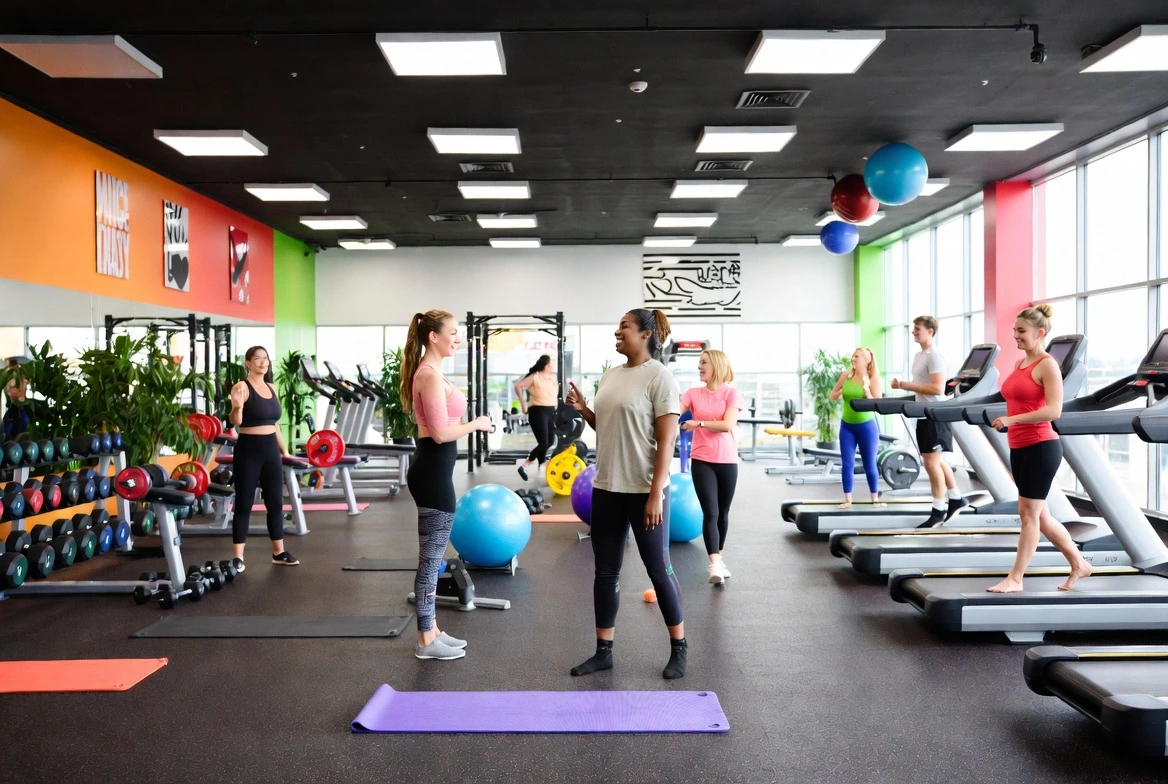
Why Joining A Friendly Gym Matters More Than You Think

why it matters joining a friendly gym blog. room with a friendly gym vibe - atlantis tiptree

Why Joining a Friendly Gym Matters More Than You Think

Short answer The single biggest predictor of whether you’ll still be going to the gym in March isn’t your motivation, your January goals, or how much you pay each month. It’s whether you feel comfortable walking through the door. A friendly, welcoming gym beats a flashier intimidating one every time, because consistency beats intensity over a year. Especially if you’re a beginner, returning after a break, or just tired of feeling like a number at a chain.

Walking into a gym for the first time can feel surprisingly intimidating. Modern fitness culture leans heavily on appearances, extremes, and social media trends — six-pack timelines, transformation reels, “new year, new you” pressure — which can make gyms feel like places you’re supposed to already be fit before you arrive.

For most people, though, fitness isn’t about becoming a professional athlete or chasing perfection. It’s about feeling healthier, sleeping better, building confidence, reducing stress and creating a routine that actually fits the rest of life. None of which requires a gym with thumping bass, mirrored walls and a personal trainer in your face within four minutes of signing up.

The atmosphere of a gym matters far more than most people realise. And it matters in a very particular way: it’s the single biggest factor that determines whether you’ll still be turning up six months later, when the January motivation has long since worn off.

The January trap

The numbers on this are eye-watering. Around 80% of January gym joiners stop turning up by mid-February. By April, the figure is closer to 95%. That’s not weakness or laziness — it’s a systemic problem with how big-chain fitness is sold.

The model is built around January. The big gyms sign up tens of thousands of new members in the first two weeks, charge them for a full year, and quietly count on most of them not coming. The whole business plan depends on the failure of the people paying for it. It is not a friendly system.

The result is gyms that look great in adverts, are packed on January 5th, and feel impersonal and discouraging by January 20th. The flagship features — the bright lights, the rows of identical machines, the screens showing fitness influencers — all subtly say: this place is for people who are already fit. Not for you.

The big-chain January model is built around your failure. The friendly-gym model is built around your return.

Confidence starts with environment

One of the biggest reasons people stop exercising isn’t willpower. It’s that they simply don’t feel comfortable in the environment they’re training in.

Large commercial gyms can feel impersonal, even intimidating, especially for beginners. Busy floors, unfamiliar equipment, the low-level anxiety that someone’s watching you — all of it knocks confidence before momentum has had a chance to build. People decide, often within their first three visits, that the gym “isn’t for them.” They’re half right. That gym isn’t for them.

A friendly gym environment changes the whole equation. When people feel welcomed and not watched, they’re much more likely to enjoy the experience, ask questions when they need to, and return next week. Familiar faces, positive interactions, a non-judgemental atmosphere — these aren’t soft fluff. They’re the actual mechanism by which adults stick to anything new.

This matters especially for:

  • Beginners who’ve never set foot in a gym and don’t know how a machine works
  • Older adults who feel out of place in a room full of twenty-somethings
  • Returners who used to train years ago but have lost the confidence to walk back in
  • Anyone going through a hard patch — grief, stress, illness, body-image difficulty — for whom the gym needs to be a relief, not another source of pressure

The vast majority of adults belong in one of those four categories. Almost no one is the person the chain-gym advertising imagines.

Community creates consistency

Motivation naturally comes and goes. Consistency is what creates long-term progress.

One of the most overlooked benefits of joining a community-focused gym is the positive impact on consistency. When people enjoy where they’re training, exercise stops being something they have to force themselves to do, and starts being something they look forward to. The Tuesday Pilates class becomes a fixed point in the week. The early-morning regulars learn each other’s names. The receptionist remembers your dog’s recent surgery.

This isn’t sentimentality — it’s behavioural science. Humans repeat behaviours that are tied to positive social context. We avoid behaviours that feel anonymous and transactional. A friendly gym leverages this; a corporate one fights against it.

Independent gyms create stronger community connections because the environment is genuinely more personal. Staff know members by name. People naturally interact between sets and in the changing room. The atmosphere feels welcoming rather than corporate. Some of our members at Atlantis have been part of the same Tuesday Pilates group for over a decade. They didn’t join the class for the friendship — the friendship happened because they kept going to the class. The two reinforce each other.

Wellness is more than exercise

Modern wellness has finally caught up with what older traditions always understood: training isn’t the whole story. Recovery, sleep, stress management, social connection and relaxation are equally important parts of the equation.

This is why gym-and-spa environments have become genuinely popular in the last decade. The chance to combine a hard training session with a sauna afterwards, or a swim and a steam to follow a stressful week, is more useful than a gym alone. The recovery isn’t the dessert. It’s half the meal.

At Atlantis Gym & Spa, members have access to facilities designed to support both fitness and wellbeing under one roof:

  • A fully equipped gym floor with cardio, free weights and resistance machines
  • A dedicated functional fitness and combat training area
  • The spa: swimming pool, sauna, steam room and jacuzzi
  • A full timetable of group classes — Pilates, Yoga, Aqua, HIIT, Boot Camp, and more
  • Beauty treatments with Sue — facials, massage, waxing, nails
  • Reiki therapy with Sean for deeper wellbeing and recovery

Creating a balanced environment is what makes fitness feel sustainable across decades, not just months.

Independent gyms offer a different experience

There’s something genuinely different about independently run gyms and wellness clubs.

Rather than feeling like corporate spaces — the same fit-out you’d find in Slough or Norwich or anywhere else — independent gyms develop their own personality, atmosphere and sense of community over time. People recognise each other. Friendships form naturally. The environment feels relaxed and welcoming rather than performance-pressured.

It also means the people who own the gym are usually the people you actually meet. At Atlantis, Sean and Sue have been running the place since they founded it in 2005. They’re both still on site. If you have a problem, you don’t escalate it through a call centre — you mention it to the people who built the club. The accountability is direct, the ethos is consistent, and the place feels like somewhere with a soul rather than a brand template.

The big chains can’t replicate this. It’s not in their business model. They’re optimised for member volume and standardisation. Independent clubs are optimised for the people who actually walk through the door.

What a friendly gym actually looks like (in practice)

Beyond the marketing, here’s what “friendly gym” means at Atlantis on a normal Tuesday:

  • Reception staff who learn your name in the first week and remember it forever
  • An instructor who notices you on a new machine and offers a 30-second walk-through, no upsell
  • The same group of regulars in the same classes — people who say hello in the car park
  • A changing room culture where nobody’s in a rush and conversation is normal
  • Members of every age and shape, training at every level of intensity, all coexisting without judgement
  • A spa area where you can spend twenty minutes in the steam after class and nobody’s clock-watching
  • An owner who’ll genuinely sit down with you if you want to talk about what would suit your goals

None of this is in the brochure. None of it shows up in the social ads. But it’s what makes the difference between “I’m a member of a gym” and “I’m part of a place.”

The test of a friendly gym: Can you walk in on a Tuesday morning, not see anyone you know, and still feel welcome? At chain gyms, the answer is usually “you’re invisible.” At a good independent club, the answer is “reception says good morning by name and asks how your week’s going.” That’s the difference.

What our members actually say

The throughline in feedback from Atlantis members tends to be similar regardless of whether they’re in their twenties or seventies:

  • “I’d been a member of [big chain] for two years and was barely going. I’ve been at Atlantis four months and I’m here three times a week.”
  • “I came back to the gym after a long break and was nervous — the staff made it so easy.”
  • “Sean walked me through every machine on day one. I’d never had that anywhere else.”
  • “The class crew has become some of my closest friends.”
  • “I come for the spa as much as the gym, honestly. It’s the best part of my week.”

None of that comes from the equipment. It comes from the environment.

Fitness should feel supportive, not intimidating

The truth is that the “perfect” gym isn’t necessarily the one with the loudest music or the biggest Instagram presence. For most people, the best gym is simply the one where they feel comfortable enough to keep showing up consistently. The one where they bump into the same kind faces every week. The one where the staff know they exist.

A friendly environment builds confidence, improves motivation, and makes fitness feel like a part of life rather than a punishment. It’s also the only sustainable model for adults who aren’t trying to win Olympia — which is, frankly, all of us.

Whether you’re completely new to exercise, returning after time away, or simply tired of feeling like a swipe-card number at a chain, finding the right environment can make all the difference.

If you’re thinking about it

If you’re reading this in January, the urge to sign up somewhere flashy is loud. Resist it. The flashy thing rarely delivers across a year. The friendly thing usually does.

If you’re reading this in any other month, the same applies — you just don’t have the advertising noise pulling you toward the wrong decision. Easier to think clearly.

Atlantis Gym & Spa has been in Tiptree, Essex since 2005. Independent. Family-run. Built around the simple idea that most people want a gym they actually look forward to going to. If that sounds like what you’ve been missing, come and have a look.

Come and see for yourself

Book a tour of Atlantis Gym & Spa in Tiptree — no commitment, no pressure, just a chance to walk around the club and see whether it feels like a place you’d actually look forward to coming to. Call 01621 816955 or visit us on Chapel Road.

Book a Tour