Gym Archives - Atlantis | Tiptree

Spring Reset: 5 Easy Ways to Get Back Into Fitness in Tiptree

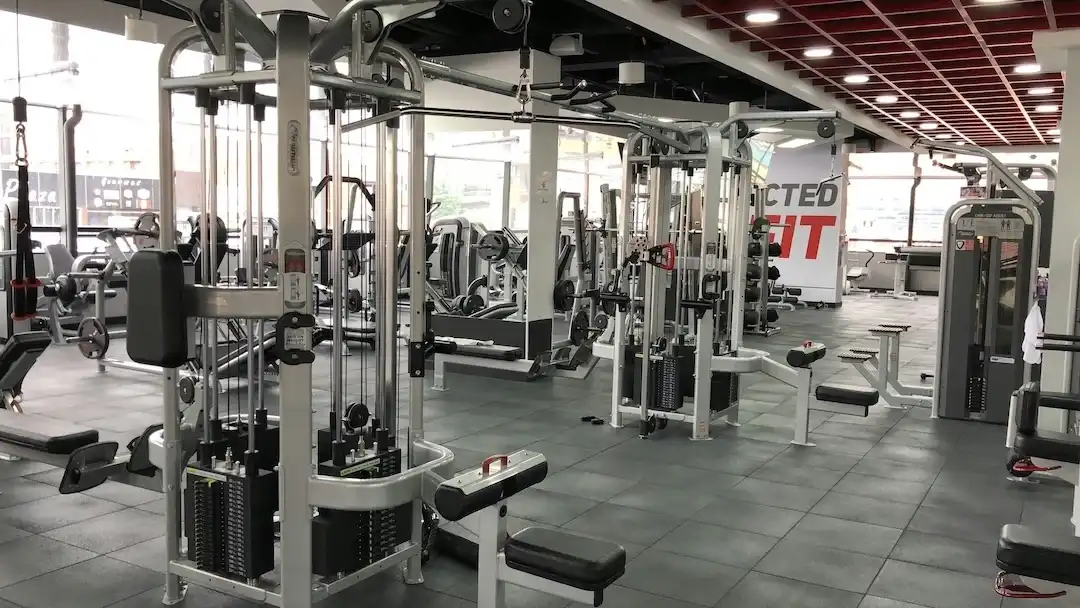
Bright gym floor with cardio machines at Atlantis Health & Beauty Spa in Tiptree, Essex

5 Easy Ways to Get Back Into Fitness This Spring (Without Burning Out)

Short answer You don’t need a dramatic overhaul to get back into fitness. The five things that actually work, in order: commit to two sessions a week (not seven), pick the lowest-friction option you have, get a fresh programme written for who you are now, use classes to take the decisions away, and build in a reward at the end. Spring is genuinely the easiest time of year to restart — the body, the weather and the daylight are all on your side. The hardest part really is just walking through the door the first time.

If the new-year rush has fizzled out and you’re looking at the lighter mornings wondering where to start again, you’re in good company. Most people who joined a gym in January have stopped going by mid-February. Most of those people genuinely meant to keep at it. The plan was just too ambitious for real life.

Spring is the second-best opportunity to restart — and in some ways the first-best, because the pressure is off. You’re not signing up alongside a thousand other people. You’re not making a sweeping declaration. You’re just easing back in, quietly, when the weather’s finally cooperating and the early starts don’t feel like a punishment.

Here are five gentle, realistic ways to ease back into fitness this spring — the kind of approach that actually sticks past April.

Why spring is genuinely easier than January

This isn’t marketing — it’s actually true. Spring delivers a small but real psychological advantage that January doesn’t:

  • Daylight extends. Light mornings make 6am workouts feel possible. Light evenings make after-work sessions feel inviting. Your circadian rhythm is on your side.
  • Temperature warms. Walking to the gym in horizontal February rain is its own special hell. April drizzle is forgivable.
  • The pressure is off. No one’s judging you for starting in April the way they might (silently) for joining mid-January and quitting two weeks later. You’re just an adult building a useful habit.
  • The gym is quieter. Honestly. The January crowds are gone by March. You can use the machines you want, when you want.
  • Your body has settled. Winter inactivity has a way of building a low baseline of stiffness and sluggishness. Spring tends to be the moment your body starts asking for movement again, almost on its own.

You’re not fighting the season. The season is on your side.

1. Start with two visits a week, not seven

The fastest way to quit is to promise yourself the impossible. Six gym sessions a week, an hour each, plus running on Sundays, plus meal-prepping every weekend — this is the standard restart plan most people write for themselves on day one, and it’s the standard restart plan they abandon by day twelve.

Two sessions a week is enough to build the habit. It’s sustainable through a busy week, a sick child, a difficult deadline. It’s also remarkably effective — two well-structured strength-and-cardio sessions a week, repeated for months, will deliver more results than five chaotic sessions you quit after a fortnight.

Put those two slots in your calendar like any other appointment. Same days, same times, repeating weekly. Tuesday 6pm. Saturday 9am. Whatever fits. The fixed pattern is what builds the habit. After a month of doing two sessions reliably, you can think about adding a third — not before.

It’s far easier to add a third session later than to claw back from burnout. Start small. Stay consistent. Build from there.

2. Pick the lowest-friction option you have

Friction is the silent killer of fitness routines. Every step between you and the workout — the drive, the changing, the unfamiliarity of the equipment, the decision about what to do today — is a chance to talk yourself out of it.

The fix is to start with the option that has the lowest friction for you personally. For a surprising number of our members, that’s the pool. A relaxed swim or an Aqua class is kind on the joints, surprisingly good cardio, and doesn’t leave you aching for three days afterwards. You don’t need to know how to use a machine. You don’t need to plan a session. You just need to get in the water.

If the gym floor feels intimidating after a break, the water is a brilliant on-ramp. Some of our most consistent members started with swimming, used it for two months while they rebuilt confidence, and only then graduated to the gym floor proper.

For other people, low-friction looks different:

  • The treadmill — familiar, simple, you just walk
  • A single class on a specific day, every week — no decisions, no flexibility, no flake-out
  • A 25-minute express session with just three exercises — in and out before excuses arrive
  • The spa — if walking into the building at all is the hard part, a sauna and steam visit counts. Get through the door three times a week, and a workout eventually follows.

Pick the version that requires the smallest amount of you to overcome. Build from there.

3. Book a fresh programme

Routines go stale. A programme that was written for the “you” of two years ago, before the back twinge or the new job or the year of inactivity, probably doesn’t fit anymore. Trying to force it usually ends with frustration after the third session.

Every member at Atlantis can get a free health appraisal and a tailored plan — a quick reset that takes the guesswork out of what to actually do when you walk in. Twenty minutes with a member of the team, a few honest questions about where you are now, what you can manage, and what you actually want from the next few months. Then a programme that fits the current version of you, not the version from before.

The relief of arriving at the gym already knowing what you’re going to do is genuinely underrated. Decision fatigue is a real thing, and a written plan in your phone removes most of it.

4. Use a class to take the decisions away

Speaking of decision fatigue: classes are a brilliant restart tool because someone else is doing the thinking.

You don’t need to decide what to train, how heavy, how many sets, in what order. You don’t need to wonder whether you’re doing it “right.” You just turn up, follow along, and do whatever the instructor calls. That’s it.

The Atlantis timetable includes options for almost every level and mood:

  • Total Tone — full-body strength conditioning
  • Legs Bums & Tums — lower-body focus, friendly atmosphere, very approachable
  • Pilates — core, posture, control, ideal for returners
  • Yoga / Fitness Yoga — movement, breath, calm
  • Nifty Fifties — designed for over-50s, friendly pace, regular community
  • BoxFIT HIIT — harder conditioning when you’re ready for it
  • Aqua — full-body, low-impact, in the pool
  • Stretch Mobility & Core — the perfect bookend session

All classes are included with membership — so there’s no reason not to try several and see what clicks. Most members find one or two they end up going to every week, alongside their gym-floor sessions.

5. Build in the reward

This is the trick most fitness plans skip, and it’s probably the most important one.

Your brain learns to repeat behaviours that end with a positive feeling. If your workout ends with you panting in a car park, late for work, slightly resentful — you’re training your brain to associate the gym with stress and obligation. Of course you don’t want to go.

If your workout ends with twenty minutes in the sauna, steam room or jacuzzi — warm, quiet, no demands — you’re training your brain to associate the gym with feeling good. That association is what keeps people coming back long after motivation fades.

At Atlantis, the spa facilities exist for exactly this reason. A swim and a sauna after class. A jacuzzi after legs day. A steam to finish a long week. The recovery is the reward built in, every time. Members who use the spa regularly are also, not coincidentally, the members who train most consistently.

The cheat code for restarters: Promise yourself the sauna at the end. Tell yourself the workout is just the price you pay to get the twenty-minute steam afterwards. Within six weeks, your brain has stopped negotiating — it just expects both, and the workout part stops being the hard sell.

The honest thing nobody tells you about restarting

The first two weeks back are the hardest. Not because of the workouts — the workouts are usually fine. It’s because of the friction. Finding your kit. Remembering your locker code. Working out how the machines have changed. Getting your sleep back on a schedule that includes earlier mornings or evenings at the gym.

Around day fourteen, this settles. Suddenly your kit is packed the night before without thinking. Your locker code is automatic. The walk to the gym feels normal instead of new. Your body has started looking forward to the sessions rather than dreading them.

If you can survive the first two weeks, you’ve mostly survived the restart. The third week onward feels noticeably easier than weeks one and two. Most people don’t know this and quit on day eight, convinced it’s never going to feel okay. Three days later, it would have.

What to skip when you’re restarting

Things people do on restart that quietly sabotage themselves:

  • Trying to match what you used to do. The version of you who trained five years ago is not the version of you starting today. Build a current plan, not a memory.
  • Starting at maximum intensity. The post-workout soreness from going too hard on session one can take ten days to clear. By then, you’ve missed three planned sessions and given up.
  • Buying lots of new kit. The shopping isn’t the workout. Wear what you have. Buy nicer kit after you’ve actually shown up for two months.
  • Tracking everything. Apps, calories, macros, heart rate, sleep. Too much data at restart point is overwhelming. Track one thing: whether you turned up. Build from there.
  • Telling everyone you’re starting. Quiet starters finish more often than loud ones. Just do it.
  • Demanding perfect weeks. One missed session isn’t a failure. Six missed sessions in a row is. Aim for “mostly there,” not “perfect every week.”

The local angle

None of this requires being “fit” first. Atlantis has welcomed every age, every ability and every starting point since 2005 — including a lot of Tiptree members who hadn’t set foot in a gym for a decade before walking through our door. The friendliest thing about a small independent club is that nobody’s watching. Everyone’s just getting on with their own thing.

You don’t need to prepare. You don’t need to lose weight first, or find your old kit, or wait for next Monday. The best spring restart is the one that happens this week.

Fancy a fresh start this spring?

Pop in to Atlantis on Chapel Road, Tiptree, or call us on 01621 816955 to arrange a look around and your free fitness appraisal. No pressure, no commitment — just a chance to see the place and have a chat about what would suit you.

Book a Tour

Best Gym Workouts for Fat Loss in 2026

gym workouts for fat loss. plate with the words 'weight loss' on it. atlantis tiptree

The Best Gym Workout for Fat Loss (2026 Guide)

Short answer There isn’t one. Fat loss comes from a sustained calorie deficit, not a magic exercise routine. The workout that works best is one that builds or protects muscle, raises your daily energy expenditure, and that you’ll actually repeat every week for six months. Two strength sessions, one steady cardio, one harder conditioning piece, and walking more is the framework that delivers — the rest is consistency, food and sleep.

If you’ve searched for the best gym workout for fat loss, what you’re probably hoping for is a magic combination of exercises that melts fat off specific areas in record time. That’s not a criticism — it’s human. We want results, we want them quickly, and the fitness industry has spent forty years convincing us that the right workout is the missing piece.

The uncomfortable truth is that the workout is one of four things that drive fat loss, and arguably the least important of the four. The other three — nutrition, daily movement outside the gym, and sleep — usually matter more. That’s not a reason to skip the workout. It’s a reason to stop expecting the workout to do all the work.

What actually causes fat loss

Body fat is stored energy. Your body holds onto it for situations where food might be scarce — situations that, for most of us in Tiptree and the rest of modern Britain, never actually happen. To lose body fat, you need to spend more energy than you take in, consistently, for long enough that your body has to dip into its reserves to make up the difference.

That’s it. That’s the only mechanism. Everything else — the protocols, the splits, the supplements, the influencer routines — is just different ways of trying to nudge that one equation in the right direction.

The reason there isn’t a single best workout is that workouts contribute only one part of the equation: energy spent in the gym. A 60-minute weights session burns somewhere between 250 and 400 calories. A hard cardio session might burn 400 to 600. That’s not nothing — but it’s a Mars bar and a packet of crisps. The food you put in your body, and the movement you do across the other twenty-three hours of the day, dwarf what happens in any single workout.

Why strength training beats cardio for fat loss

This is going to surprise people who’ve been told for decades that cardio is the fat-loss exercise. It isn’t, and the reason is muscle.

Muscle tissue is metabolically active. It costs your body energy to maintain, even when you’re sitting on the sofa watching the football. The more muscle you carry, the higher your resting metabolic rate — meaning you burn more calories doing absolutely nothing.

When people lose weight through cardio alone and aggressive dieting, they tend to lose a frustrating amount of muscle along with the fat. Their body becomes smaller but also less metabolically active, which is exactly what makes weight regain so common. The classic “lost twenty pounds, gained back twenty-five” cycle is largely a story of lost muscle followed by regained fat.

Strength training while in a calorie deficit protects muscle. Done right, it can even add muscle while you’re losing fat — particularly if you’re new to lifting. The result is a body composition change that lasts: less fat, more muscle, higher metabolism, better shape, stronger frame.

If you only have time for one type of training to support fat loss, lift weights.

The four-day fat loss training week

Here’s a framework that works for the vast majority of people, beginner through intermediate:

  • Day 1: Full-body strength session (45–60 minutes) — squat or leg press, chest press, lat pulldown, Romanian deadlift, shoulder press, plank
  • Day 2: Steady cardio (30–45 minutes) — incline treadmill, bike, rower or cross trainer at a moderate pace
  • Day 3: Full-body strength session (45–60 minutes) — same pattern, different exercises or rep ranges
  • Day 4: Intervals or circuit (25–40 minutes) — SkiErg/rower intervals, a mixed-equipment circuit, or punch-bag conditioning

Across the week: two strength sessions, one steady cardio, one harder conditioning piece. Three of those four pieces already exist in the Atlantis Workout Library under their proper names — Full-Body Strength & Fitness, Steady Stamina Builder, SkiErg & Rower Intervals and the Calorie-Burn Circuit. Pick, rotate, repeat.

The trick is consistency. A perfect plan you do for three weeks loses to a slightly imperfect plan you do for six months. Every time.

What good cardio looks like — and what to skip

Cardio absolutely belongs in a fat-loss plan, but not for the reasons most people think. Cardio doesn’t burn fat directly while you’re doing it (that’s not how it works metabolically), and it doesn’t “boost your metabolism” in any meaningful long-term way. What it does is:

  • Add to your daily calorie expenditure
  • Improve heart and lung fitness, so you can do more in the gym
  • Improve recovery from strength sessions
  • Help with hunger regulation and stress, which makes nutrition easier

Cardio that helps

  • Steady incline walking — kind to the joints, easy to repeat, can be done while listening to a podcast. Massively underrated. The incline treadmill at Atlantis is one of our most-used machines for exactly this reason.
  • Rowing — full body, low impact, scales from gentle to brutal depending on effort
  • Cycling (bike or outdoor) — recoverable, joint-friendly, great for high volume
  • Short intervals — once or twice a week, no more. The 80% rule: if it leaves you wrecked, you did too much.

Cardio that doesn’t

  • Hours of slow steady-state when you’re already tired and under-recovered
  • Punishing HIIT five days a week — your nervous system can’t recover, your strength sessions tank, and you end up doing everything badly
  • Cardio as punishment for what you ate — psychologically corrosive and rarely sustainable

The secret weapon: walking

NEAT stands for non-exercise activity thermogenesis. It’s a technical name for every calorie you burn that isn’t from a workout — walking around the house, fidgeting, standing up to make tea, climbing the stairs, walking the dog, mowing the lawn.

For most people, NEAT burns three to five times more calories per day than their gym workout does. It is the single most overlooked lever in fat loss.

The practical version: hit 8,000 to 10,000 steps a day. Don’t drive somewhere you could walk. Take the stairs. Park further away. Walk during phone calls. Walk after meals. None of these things feel like fitness. All of them add up.

If you do nothing else from this entire article: Walk more. Step counts in the 8–12k range, sustained for months, have outperformed structured cardio programmes in multiple weight-loss studies. It’s also the cheapest, least demanding, most enjoyable form of exercise on the planet.

The food bit (you knew it was coming)

You can’t out-train poor nutrition. Not in your twenties, definitely not in your forties. This article is about training rather than eating, so the short version:

  • Protein matters most. Aim for around 1.6 to 2.2 grams per kilogram of bodyweight per day. It keeps you full, protects muscle, and has the highest metabolic cost to digest.
  • Eat mostly whole foods. Not because processed food is evil, but because whole foods are harder to overeat. A 200-calorie apple takes longer to eat than a 200-calorie biscuit.
  • You don’t need to count calories forever. But you should count them for a fortnight to learn what you’re actually eating. Almost everyone underestimates by 30% or more.
  • Don’t drink your calories. Especially alcohol. It’s the silent destroyer of fat-loss progress.

The mistakes that kill fat loss progress

  • Switching workouts every week looking for “the right one” — you can’t progress what you don’t repeat
  • Endless cardio at the expense of strength — see the muscle argument above
  • Eating like you’re in a deficit at home and like you’re on holiday at weekends — averages out to maintenance
  • Sleeping six hours a night — wrecks hunger hormones, wrecks recovery, wrecks willpower
  • Measuring progress only on the scales — water-weight fluctuations swamp real fat loss day to day. Use photos, measurements, and how clothes fit.

What we see at Atlantis

The members at our gym in Tiptree who change their body composition over a year aren’t the ones doing the most extreme workouts. They’re the ones who turn up three or four times a week, every week. They lift weights. They walk most days. They get most of their food right, most of the time. They sleep. They give it months, not weeks.

The members who don’t see results are usually the ones who throw themselves at fat loss like a war for six weeks, burn out, vanish for two months, then start again from scratch in January. It’s the classic on-and-off cycle, and it never delivers.

The boring path beats the dramatic one every time.

A four-week starter plan

If you’re new to all this and want a structured place to begin, here’s a complete plan you can run at Atlantis straight away. Repeat it weekly for the full month, then reassess.

  • Monday: Full-Body Strength & Fitness (from the Workout Library)
  • Tuesday: 30-minute incline treadmill walk + 5-minute core finisher
  • Wednesday: Rest, or a class like Stretch Mobility & Core from the timetable
  • Thursday: Full-Body Strength & Fitness, alternate exercises
  • Friday: Steady Stamina Builder — 35 minutes on a machine of your choice from the Gym-Apedia
  • Saturday: Calorie-Burn Circuit OR a Boot Camp class
  • Sunday: Walk outdoors for 45+ minutes

Walk every other day. Eat protein at every meal. Track your food for the first two weeks. Repeat the same plan for the full month. Reassess at the end.

Want help putting this into practice?

Atlantis members get a staff team who’ll walk you through any of the workouts above and help you set up the equipment safely on your first attempt. We’ve been doing this for over twenty years in Tiptree — we’ve seen every kind of fat-loss journey there is.

See Membership Options