
Reiki Archives - Atlantis | Tiptree

Reiki Explained: What Actually Happens in a Session (and Why People Come Back)

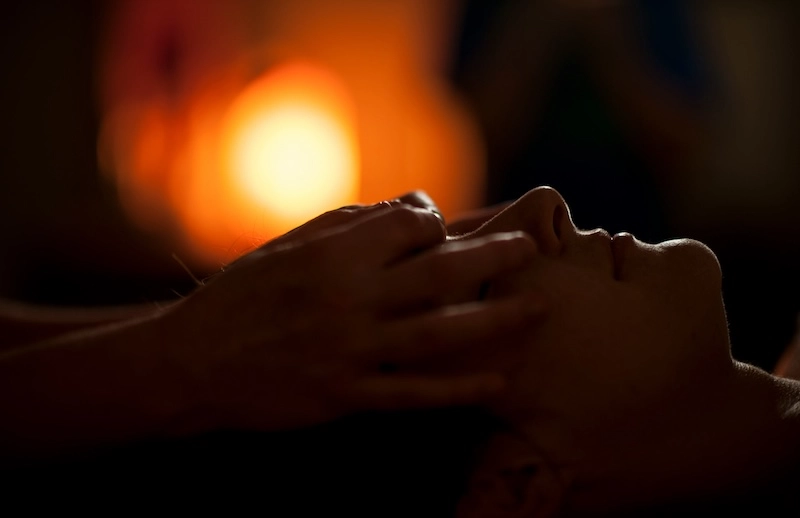
Calm, quiet Reiki treatment room at Atlantis Gym and Spa Tiptree

What Is Reiki? An Honest Guide (And What to Expect)

Short answer Reiki is a Japanese complementary therapy focused on relaxation, stress reduction and emotional wellbeing. A session is a quiet, peaceful, hour-long experience where the practitioner uses gentle hands-on or hands-near techniques while you lie comfortably. It isn’t medical treatment, it isn’t religious, and you don’t need to believe anything in particular. Most people leave feeling unusually calm, settled and clear-headed.

Reiki is one of those things that’s hard to describe until you’ve tried it. “Energy work” sounds either too mystical or too vague, depending on who’s reading. People who’ve never had it picture incense and chanting. People who’ve had it once tend to book a second session and stop trying to explain it to anyone else.

So in plain English: it’s a quiet, hour-long session that leaves most people feeling unusually calm, settled and clear-headed. There’s nothing dramatic about it. Nothing weird is going to happen. You don’t need to chant, breathe in any special way, or believe in anything in particular.

Here’s what’s actually going on, and what to expect if you’re considering trying one.

The short version

Reiki is a Japanese complementary therapy focused on relaxation, stress reduction and emotional wellbeing. The name comes from rei (universal) and ki (life energy). It was developed in 1922 by Mikao Usui in Japan and has been practised continuously ever since — both in the East as part of a longer wellness tradition, and in the West as a recognised complementary therapy.

During a session, the practitioner uses gentle hands-on or hands-near techniques while you lie comfortably, fully clothed. Most people describe the experience as peaceful, grounding and restorative. Some people feel warmth or a light tingling. Some drift into a half-asleep meditative state. Others just feel deeply still. None of those experiences is more “correct” than the others.

What it consistently delivers, across people who’ve tried it, is a noticeable shift towards calm. Many describe it as the first time in a long while they’ve actually switched off.

An hour of properly held, undisturbed quiet has become genuinely rare in modern life. Reiki gives you one.

What it isn’t

Worth being clear about. Reiki isn’t:

  • A medical treatment. It’s not a substitute for medical care and shouldn’t be used as one. If you have a health condition, see your GP. Reiki is complementary — it sits alongside conventional care, not instead of it.
  • Religious. Despite its Japanese roots and the language around energy, Reiki itself isn’t tied to any belief system. People of any faith or none can have a session without any conflict.
  • Dramatic. Nothing weird is going to happen. You won’t see visions or be asked to do anything strange. The whole experience is calm and gentle by design.
  • Require you to believe in it. One of the things skeptics often discover is that the relaxation effect happens whether you’re a true believer or a quiet doubter. You don’t have to subscribe to anything to benefit from an hour of held stillness.

What about the science?

Here’s the honest position. The research on Reiki itself is mixed — some small studies show measurable effects on stress, anxiety and pain perception, others show effects no greater than relaxation alone. What’s clearer is that one hour of held, undisturbed quiet in a calm room reliably reduces cortisol, lowers heart rate and improves subjective wellbeing in almost everyone. Whether the additional effects of Reiki specifically are doing something further is an open question.

What we’d say plainly: the people who book sessions with Sean don’t come for a debate about mechanism. They come because they leave feeling better, and they keep coming back because that effect is reliable. That’s the practical reality, regardless of how you choose to explain it.

The NHS recognises Reiki as a complementary therapy and notes that it can support relaxation and stress reduction. It is not, and should not be presented as, a treatment for medical conditions.

What a session at Atlantis is like

Our co-founder Sean has been practising Reiki and meditation for over thirty years. He lived and studied in China under Master Yu Tian Jian within the Esoteric Buddhist tradition, which gives his approach a depth and quiet authority you don’t always find with shorter-trained practitioners. Sessions are private, in a peaceful room at Atlantis in Tiptree, and last around an hour.

Before

You’ll have a short, relaxed chat with Sean. He’ll explain what’s going to happen, answer any questions, and ask you a few simple ones — how you’ve been feeling, whether there’s anything specific you’d like the session to focus on, whether you’d prefer to lie down or sit. There’s no form to fill in. No clinical setup. It’s a conversation.

During

You lie down on a treatment table, with a blanket if you’d like one. Shoes off. Phone away. The room is quiet, dimly lit, with soft background sound if that suits you. Sean works calmly with hands-on or hands-near techniques, moving slowly around the body.

What you experience varies. Some people drift in and out of a very relaxed, almost meditative state. Some feel warmth in different areas, or a light tingling. Some report feeling unusually heavy or weightless. Some simply feel still in a way they haven’t for months. Some fall asleep. All of these are normal. None is “correct.”

What you won’t experience: anything that requires you to do anything. You’re not asked to focus, visualise or concentrate. The whole session is one where nothing is being asked of you.

After

Sean will give you a few quiet minutes to come back to yourself. Most people like some water and don’t want to rush straight back into a busy schedule. The calm tends to linger — many clients say their sleep is noticeably better that night, and that they wake up feeling clearer the next day.

Some people feel emotional unexpectedly after a session. That’s also normal. An hour of genuine stillness often surfaces things that the busy version of you was holding down.

Common questions from first-timers

“What if I can’t lie still for an hour?”

Almost everyone worries about this. Almost no one has the problem. By 10 minutes in, your nervous system has settled enough that the hour passes quickly. If you genuinely can’t lie down comfortably, sessions can be done seated.

“What if I’m skeptical?”

Plenty of Sean’s regular clients started skeptical. The relaxation effect doesn’t care what you believe. You’re welcome to think of it as “a quiet hour with someone who’s practised holding silence for thirty years” if that’s easier. The benefit shows up either way.

“Do I have to talk about anything?”

No. Reiki isn’t a therapy in the talking-to-someone sense. You don’t need to explain what’s going on in your life. You don’t need to share anything you’re not comfortable sharing. The brief chat at the start is just to make sure you’re comfortable, nothing more.

“How often should I come?”

That’s entirely up to you. Some people come once and that’s enough for a particular stretch of life. Some come monthly as part of their recovery routine. Some come weekly during especially demanding periods. There’s no protocol — it depends what you need.

“Can I do it if I’m pregnant / on medication / have a health condition?”

Reiki is very gentle and is generally considered safe in most circumstances, but please mention anything relevant when you book so Sean can take it into account. As above, it’s complementary — not a substitute for medical advice.

“What should I wear?”

Comfortable clothes you can lie down in. That’s it.

How Reiki differs from massage and meditation

People sometimes ask which of the three would suit them best. Quick translation:

  • Massage works on muscles and soft tissue physically. You’re typically undressed, and the practitioner is actively manipulating your body. Great for muscular tension and physical recovery.
  • Meditation is something you do yourself. The benefit comes from your own practice, repeated over time. Free, accessible, and powerful — but requires discipline.
  • Reiki sits in between. You’re fully clothed and passive, like in meditation. But you’re being held in stillness by someone else, like in massage. You don’t have to find the calm yourself — the session brings it.

For people who want to meditate but find it hard to do alone, Reiki is often the bridge. For people who’ve done a lot of massage and want something more for the nervous system than the muscles, it’s a different kind of restoration.

What people actually say

The Reiki page includes a handful of client comments — words like “totally relaxed,” “almost euphoric,” “more like me again” come up often. The throughline isn’t anything mystical. It’s that an hour of properly held, undisturbed quiet has become genuinely rare in modern life, and people feel the absence of it long before they realise that’s what they’re missing.

One client described it as “an hour where my brain finally stopped doing the thing.” That’s probably the most honest review we’ve had.

Who tends to book a session

  • People going through a stressful patch who need somewhere to land
  • Anyone curious about meditation but who’d rather be guided into stillness than try to find it alone
  • Members who use the gym hard and want a deeply restorative recovery experience
  • People who simply want an hour where nothing is asked of them
  • Adults dealing with grief, anxiety, sleep issues or a period of overwhelm
  • Curious skeptics who’ve heard friends rave about it and want to find out what the fuss is
The unexpected demographic: A surprising number of Sean’s regular Reiki clients are men in their 40s and 50s — people who would never have walked into a yoga class but who’ve found that an hour of private, structured calm is the recovery their nervous system has been quietly begging for.

After your first session: what to expect

The hours after a Reiki session vary. Most people feel calm and slightly “floaty” for the rest of the day. Most sleep noticeably better that night. Some feel a small wave of emotion arrive a few hours after the session — this passes, and is usually the system processing things it was holding.

The next day, people often report feeling clearer, more present, less reactive. The effect is gentle but real. Some people describe the week after a session as “just slightly easier to be in.”

Practical details

A one-hour private session with Sean is £60, at Atlantis Gym & Spa in Tiptree — easy to reach from Colchester, Maldon, Witham, Kelvedon and across mid-Essex. Reiki is open to members and non-members alike. You don’t need to be a regular at the gym to book.

If you’ve been curious for a while and just haven’t got round to it, this is your gentle nudge.

To book a session, or ask any question

See the full Reiki therapy page for more, or call Atlantis on 01621 816955. No pressure, just a conversation — Sean is happy to answer anything before you decide whether to book.

Learn About Reiki Sessions
What “Wellness” Actually Means (And Why It’s More Than Just Smoothies)

Calm spa setting representing holistic wellness in Tiptree, Essex

Wellness, Honestly: The 7 Pillars That Actually Matter

Short answer Real wellness isn’t green powders, £40 candles or influencers in matching loungewear. It’s the daily balance between what builds you up — movement, sleep, nutrition, stillness, connection, recovery and purpose — and what wears you down. Seven pillars. You don’t need all seven perfect. You need to pay attention to the one that’s most neglected right now, fix that, then move to the next.

“Wellness” is one of those words that’s been so thoroughly marketed at us that it’s almost lost its meaning. It conjures up green powders, expensive candles and influencers in matching loungewear photographing their breakfast smoothies. The actual thing — the version that genuinely improves your life — is far simpler, far cheaper, and not on Instagram.

The honest version is also reassuringly boring. There’s no secret. There’s no $300 supplement stack. There’s no biohack the rich know that the rest of us don’t. There’s just a small handful of things, done most days, for years. Here’s what they are and how to think about them.

A working definition

Wellness is the day-to-day balance between the things that build you up — movement, sleep, connection, calm — and the things that wear you down: stress, sedentariness, isolation, overwork, alcohol, screens.

You don’t reach wellness once and stay there. You tend to it, like a garden. Some weeks you’ll be ahead. Some you won’t. The job isn’t perfection — it’s never letting the weeds get so far ahead that you can’t catch up.

Wellness isn’t a destination you arrive at. It’s a garden you tend. Some weeks better than others. That’s the job.

The 7 pillars that actually matter

Skip the trends. The ingredients of real wellbeing are deeply unglamorous and remarkably consistent across every piece of decent research, every functional medicine framework, every culture that’s ever produced healthy long-lived adults. They are not new. They are not contested. They are not exciting.

They just work.

1. Movement

Most days, in some form. It doesn’t have to be intense. A 30-minute walk counts. A 45-minute strength session counts more. A swim counts. A garden tidy counts. What doesn’t count is the gym membership you’ve had for eight months and used three times.

The research is clear: regular movement is the single most powerful intervention for almost every aspect of physical and mental health. There is no pill that comes close. And the dose-response curve is generous — even small amounts of movement, done consistently, deliver outsized returns.

2. Sleep

The foundation everything else sits on. You can’t out-supplement six hours of broken sleep. You can’t out-train it. You can’t out-meditate it. It’s the one variable that, when it’s off, makes every other variable harder.

Most adults need 7 to 9 hours. Most adults get 6. The fix isn’t glamorous: consistent bedtimes, dark and cool bedrooms, less alcohol, fewer screens after 9pm, more attention to whether your weekday rhythm and your weekend rhythm are at war with each other.

3. Nutrition

Mostly home-cooked. Lots of plants. Plenty protein. The end of the article on what to eat is genuinely “most adults already know what to do — the gap is between knowing and doing.”

You don’t need to count calories forever. You don’t need to follow anyone’s diet. You need most of your meals to come from a kitchen rather than a packet, and you need enough protein to support muscle and satiety. Anything beyond that is fine-tuning.

4. Stillness

Meditation, breathwork, time without a screen. Five to ten minutes a day, in some form, where nothing is being asked of your attention.

This is the one most adults skip because it doesn’t feel productive. It is one of the most productive things you can do — not because of what it adds, but because of what it stops your nervous system from accumulating. A constantly-stimulated mind is an exhausted mind. Stillness is the off-switch that lets the rest of the system actually recover.

5. Connection

People who know your name. People you can ring at 11pm. People who notice when you’re not yourself. The strongest predictor of longevity in human studies isn’t diet, exercise or genetics — it’s social connection.

This is the pillar we underrate hardest in modern Britain. You can do everything else perfectly and still struggle if you’re lonely. You can have a less-than-perfect diet and still thrive if you’re surrounded by people who care about you.

The gym, the swimming pool, the class you go to every Tuesday — these aren’t just exercise venues. They’re some of the few places in modern adult life where you reliably bump into the same humans, week after week, without an agenda. That’s rarer than it sounds, and more valuable than it looks.

6. Recovery

Heat, water, rest days, gentle weeks. The bit nobody Instagrams. The bit that determines whether the training you’re doing actually delivers results.

Your body adapts to training stress during recovery, not during the workout itself. Skip recovery and you’re creating stimulus your body can’t respond to. Sauna and steam exposure, regular sleep, rest days, periodic deload weeks — these aren’t time off from wellness. They’re the bit where wellness happens.

7. Purpose

Something you give your attention to that isn’t admin. A hobby. A craft. A cause. A garden. A grandchild. A novel you’re writing terribly. Something that holds your interest because it’s yours, not because it pays the mortgage.

Purpose isn’t spiritual fluff. It’s a measurable variable in health and longevity research. People with a clear sense of purpose live longer, recover from illness faster, and report higher life satisfaction across the board. The absence of it is one of the quietest contributors to midlife unhappiness.

What this looks like at Atlantis

This is genuinely why we call ourselves a health and beauty spa, not just a gym. The training is one piece of it. The rest of the building is built around the other pillars too.

  • The pool, jacuzzi, sauna and steam in our spa area handle recovery and stillness. They’re not the dessert after the workout — they’re half the point of the building.
  • The timetable handles movement and connection. The same group of people, same time, every week. Some of our members have been doing the same Pilates class together for over a decade.
  • The beauty treatments with Sue handle stillness and slowing down. An hour where someone is taking care of you, not asking anything of you.
  • Reiki with Sean handles stillness at a deeper level — dedicated time away from the noise, with someone who’s practised holding that space for over thirty years.
  • The gym floor handles movement. The friendly staff handle the bits that aren’t on any timetable — the small daily connection of someone knowing your name and asking how your week’s been.

Nutrition and sleep are on you. We can’t do those for anyone. But we can be the venue that makes five of the seven pillars dramatically easier to keep up with.

Where to start if you’re starting now

Pick one pillar that’s weakest right now and give it your attention for two weeks. Not all seven. One.

  • Sleeping six hours? Aim for seven for a fortnight. Don’t change anything else.
  • Not moving? Two short sessions a week. That’s the only goal. Don’t add nutrition tracking on top.
  • Constantly anxious? Five minutes of stillness a day. Just that.
  • Lonely? Pick one social commitment a week you actually turn up to. A class. A walk with a friend. Same time every week.

The instinct to overhaul everything at once is the same instinct that quits by February. Real change happens at the speed of one habit at a time. You’ll have the rest of your life to add the others.

The one-pillar rule: You’re allowed to be average at six pillars and good at one. You’re not allowed to be terrible at sleep and movement and nutrition all at once. If three of them are red, you’re heading for trouble regardless of what you do with the others.

Why this matters more in Tiptree (and everywhere else)

Modern life in Essex — or anywhere else — isn’t designed for wellness. The default settings are sedentary, over-stimulated, under-slept, weakly connected, and short on purpose beyond the next bit of admin. Most of us are gently drifting away from health without quite noticing.

The work isn’t to fight that with willpower. The work is to build a few small reliable rhythms — the Tuesday class, the morning walk, the regular spa day, the dinner with your sister every other week — that quietly counteract the drift. Nothing dramatic. Nothing that requires you to become a different person.

The people who live longest and feel best aren’t doing extreme things. They’re doing ordinary things consistently, while the rest of us are doing extreme things sporadically and wondering why we don’t feel better.

One final reframe

Wellness isn’t a reward you earn when life calms down. It’s how you keep going while life refuses to. Built into the week, not bolted on after.

The thing nobody tells you: life doesn’t calm down. The kids leave home and then the parents need care. The job eases off and then a health thing arrives. There is no future version of you sitting on a beach with infinite time for wellness. There’s only this week. The pillars get tended in this week, or they don’t get tended.

Start with one pillar. Two weeks. See what happens.

Want a wellness routine that actually fits your week?

Have a chat with us about what would suit you. Call Atlantis Gym & Spa on 01621 816955 or visit Chapel Road, Tiptree. We’ve been doing this for over twenty years — we know which pillars are easiest to start with, and which ones will quietly do the most for you.

Get In Touch