
Family Swimming in Tiptree: When You Can Swim, and How It Works
The summer holidays land this week, and with them comes the question every parent in Tiptree starts asking around the second wet afternoon: where can we actually take the kids swimming?
It’s a fair question. Around here, swimming usually means a drive — loading everyone into the car, finding somewhere to park, and joining whatever’s going on at a big public pool on a rainy Tuesday in August. For a forty-minute swim, that’s a lot of afternoon gone.
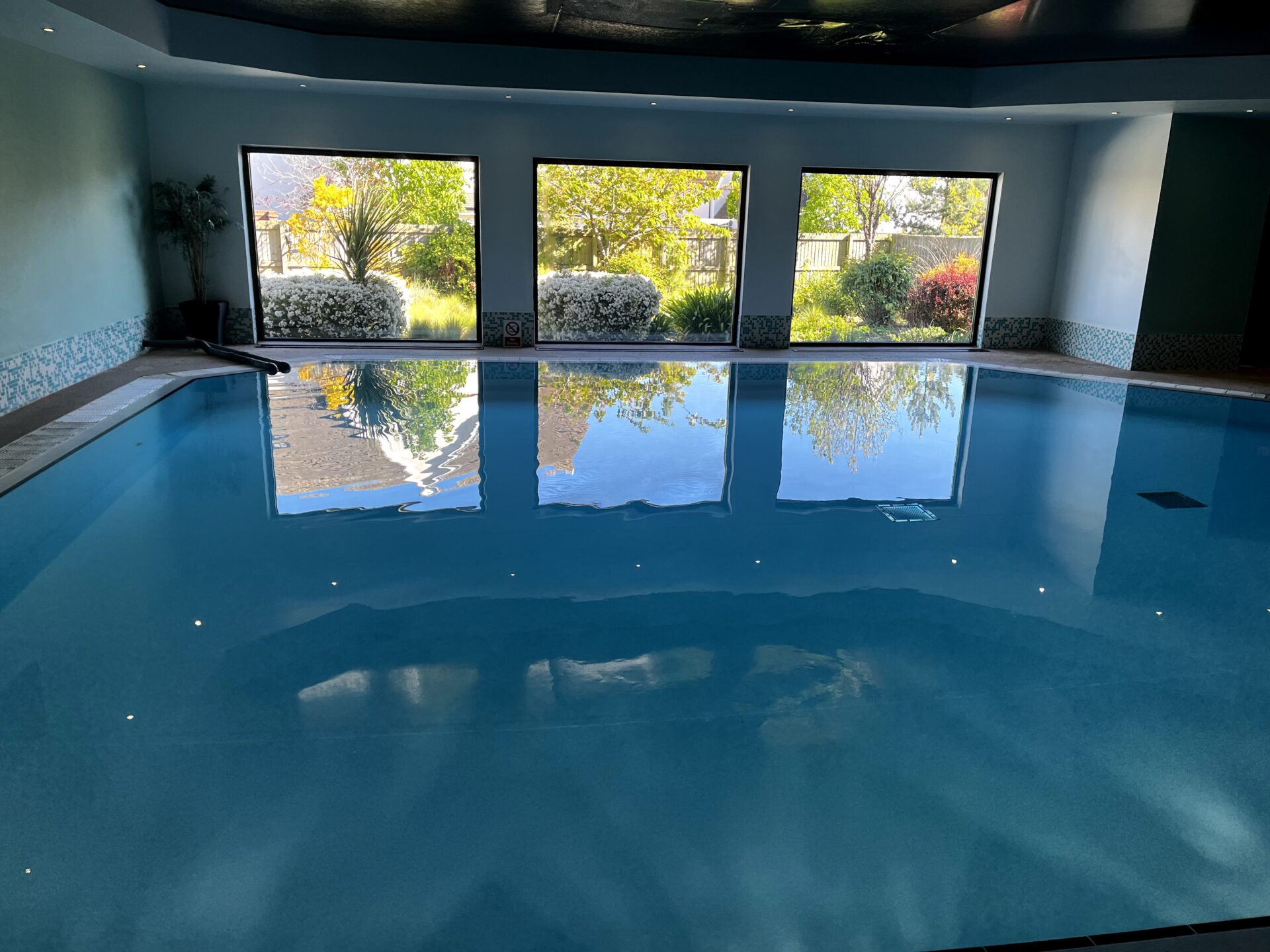
So it’s worth knowing there’s a heated indoor pool on Chapel Road, in the middle of the village, with family swim sessions every single day of the week. Here’s how it works.
Family swim times
These are the times children can be in the pool, accompanied by an adult:
| Monday to Friday | 4:00pm – 5:30pm |
| Saturday & Sunday | 12:00pm – 1:30pm |
The weekday session lands right after school, which is deliberate — it’s the slot that works for pick-up, swim, home for tea. In the holidays it’s simply the same time every afternoon, which makes it easy to build a week around.
Weekends are a ninety-minute session over lunchtime, Saturday and Sunday both. If you’re coming during a bank holiday or over Christmas and Easter, give us a ring on 01621 816955 first — those weeks can run differently.
You don’t need to book family swim
This is the bit that catches people out, because it works differently to the rest of our pool timetable.
Normally, our swimming pool runs on booked 40-minute sessions with a maximum of five people in the water at any one time. You ring up, you get your slot, and you swim without anyone else’s elbows in your way. It’s one of the nicest things about the place, and it’s the opposite of how a big leisure centre works.
Family swim is the exception. Those sessions aren’t bookable slots — they’re set times given over to families, so you come along during the window rather than reserving a place in advance. If you’re not sure whether a particular afternoon suits, ring the desk and ask. We’re a fairly relaxed bunch and we’d far rather you rang than guessed.
Why a small pool suits nervous swimmers
There’s a particular kind of child who does not enjoy a big public pool. The noise bounces. The water’s cold enough to make them go rigid on the first step. There are teenagers bombing in at the deep end. Everything about it says this is not a place to be uncertain in, which is unfortunate, because uncertain is exactly what a learning swimmer is.
Ours is a different sort of room. It’s indoors, it’s quiet, and at 30°C it’s genuinely warm — warm enough that a child who normally lasts ten minutes before their lips go blue will happily stay in for the whole session. That single fact does more for a nervous swimmer’s confidence than any amount of encouragement from the side.
It’s calm, too. Nobody’s queuing for a lane. There’s no whistle. If your child wants to spend forty minutes standing in the shallow end getting used to the idea, that’s a perfectly good use of the session, and nobody will hurry them along.
What to bring
- Swimming things and a towel each. The obvious one, and the one that gets forgotten at the door.
- Armbands or floats if your child uses them — bring your own so you know they fit.
- Something for after. Swimming makes children ravenous in a way that has to be experienced to be believed.
- A bit of patience for the first visit. New pool, new changing rooms, new everything. The second visit is always easier than the first.
Parking is free and it’s right outside, which sounds like a small thing until you’ve tried to walk two damp children back to a car park in the rain.
Can we come if we’re not members?
Give us a ring and ask — 01621 816955. It’s genuinely the quickest way to get a straight answer, because it depends a bit on what you’re after and how often you’d like to come.
If it turns out you’d be swimming most weeks, it’s worth asking about the membership options while you’ve got us on the phone. There’s a Family Membership covering a family unit of adults and dependents, which is priced on request so we can work it out around your actual family rather than a made-up average one. There’s a Joint Membership for two at £94.95 a month on a 12-month agreement. And there’s a Spa Only option if it’s the pool, sauna, steam room and jacuzzi you want rather than the gym — not everybody wants to lift weights, and that’s absolutely fine by us.
You’re also very welcome to come and have a look round before you decide anything. No appointment needed, no sales pitch waiting for you — pop down whenever suits and we’ll show you the place. If you’d rather come at a particular time, ring ahead and we’ll make sure someone’s free.
Where we are
Atlantis Gym & Spa, 14 Chapel Road, Tiptree, Essex, CO5 0RA — in the village, with free parking outside. We’re an easy run from Kelvedon, Feering, Witham, Maldon, Coggeshall and Colchester, and we’ve been family-run here since 2005.
Our full opening hours are Monday to Friday 6:30am–9:00pm, Saturday 9:00am–6:00pm and Sunday 9:00am–3:00pm. We ask everyone to be out of the facilities half an hour before closing.
The honest bottom line
Six weeks is a long time to fill. A warm indoor pool ten minutes from your front door, open every afternoon, with a set time that doesn’t change and no slot to remember to book, is a genuinely useful thing to have in your back pocket around the middle of August.
It won’t entertain them for the entire summer. But it’ll comfortably see off a wet Wednesday, and they’ll sleep like the dead afterwards.
Common questions
What are the family swim times at Atlantis?
Family swim runs Monday to Friday, 4:00–5:30pm, and Saturday and Sunday, 12:00–1:30pm. Children are welcome in the pool during those times when they’re accompanied by an adult.
Do I need to book family swim?
No. Family swim isn’t a bookable slot — you just come along during the times above. Our regular pool sessions are different: those run as booked 40-minute slots with a maximum of five people in the water, arranged by phone.
How warm is the swimming pool?
The pool is indoors and heated to a comfortable 30°C, open all year round. It’s warm enough that children happily stay in for the whole session.
Can the sauna, steam room and jacuzzi be used during family swim?
Yes. The sauna, steam room and jacuzzi all stay open as normal during family swim sessions.
Fancy a swim this week?
Family swim runs every day — Monday to Friday 4:00–5:30pm, and 12:00–1:30pm at weekends. Ring us on 01621 816955 with any questions, or just pop down to Chapel Road and have a look at the place first. We don’t mind which.
Get in Touch